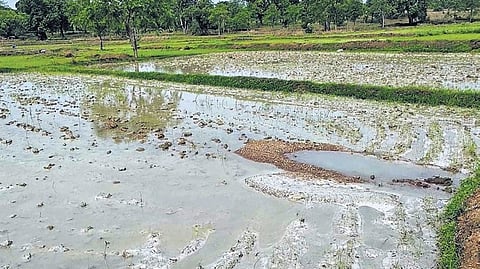

SALEM: Fly ash slurry from the Mettur Thermal Power Station has entered agricultural fields behind the plant, inundating nearly 10 acres and damaging crops such as maize, onion and cotton. Residents and farmers in the area have urged the authorities to immediately inspect the affected fields and take steps to prevent further spread of the ash.
The Mettur Thermal Power Station has two plants — MTPS-I, comprising four generating units of 210 MW each, and MTPS-II, which has a single 600 MW generating unit. The two plants together have an installed generation capacity of 1,440 MW.
Both plants generate electricity by burning coal, during which large quantities of ash are produced as a by-product. The ash generated at the station is broadly handled as dry fly ash and wet ash.
A portion of the fly ash is supplied to cement factories and other industries for utilisation. The remaining ash is mixed with water and stored in designated ash ponds, as dry fly ash cannot be stored in the open due to the risk of it being dispersed by wind.
Recently, water mixed with ash reportedly leaked from the storage area at the rear of the power station and entered the agricultural fields located nearby. The ash slurry spread several metres into the fields, with water and ash inundating nearly 10 acres of agricultural land.
Farmers said standing crops, including maize, onion and cotton, had been affected after the ash slurry entered the fields. They expressed concern that the continued presence of ash and slurry could further affect agricultural land and crops if the issue was not addressed immediately.
