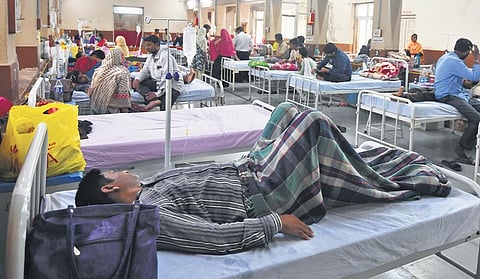

HYDERABAD: As dengue cases have surged significantly over just one month, experts are sounding a warning about the potential burden on hospital bed availability, medical personnel and treatment resources in the coming year if the virus type undergoes a change, akin to the challenges witnessed in 2019 and previous occurrences.
Data from the National Centre for Vector-Borne Diseases Control under the Government of India revealed that, up until the end of August 2023, Telangana has reported a total of 2,972 dengue cases. While there have been no officially documented fatalities, there have been reports of two deaths, one in Mulugu and the other in the Hanamkonda district, as reported by TNIE. A substantial spike of 961 cases was recorded on July 31, with a significant portion originating in Hyderabad.

Dr Karuna Madapu, a paediatrician at EVK EMRI Hospital in Secunderabad, expressed concern, stating, “Even though many people are getting infected, hospital admissions remain low, suggesting the possibility of underreporting of cases.”
“It appears to be affecting primarily those who have had previous dengue infections, and currently, the situation is manageable,” she said. She said there are four types of dengue viruses and urged preparedness for the future. “There is a scientific theory that a mild dengue variant this year could become a severe infection next year,” she warned.
Dr Madapu also pointed out, “This year’s mild variant belongs to the flavivirus category, but it can lead to severe shock, manifesting in different patterns. This has been scientifically proven.”
Additionally, Dr Madapu highlighted the presence of other viruses, including seasonal flu and Respiratory Syncytial Virus (RSV), particularly among children, and underscored the importance of proper care and mask-wearing for those who are ill. She called for increased awareness and public responsibility, urging the State government to take action in tracking down areas with rising dengue cases.