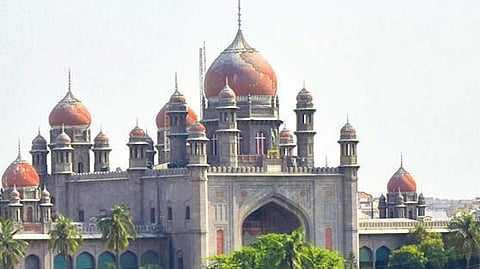

HYDERABAD: The Telangana High Court on Wednesday partly allowed a batch of writ petitions challenging the constitution and functioning of the Justice P.C. Ghose Commission, which investigated alleged irregularities in the Kaleshwaram Lift Irrigation Project.
A Division Bench comprising Chief Justice Aparesh Kumar Singh and Justice G. M. Mohiuddin held that while the appointment of the commission was within the framework of the Commissions of Inquiry Act, 1952, no coercive steps shall be taken based solely on its recommendations.
The petitions were filed by former Chief Minister K. Chandrasekhar Rao, former Minister T. Harish Rao, senior IAS officer Smita Sabharwal, and former IAS officer S. K. Joshi, among others. They contended that the inquiry violated principles of natural justice and failed to adequately consider their explanations.
The Ghose Commission, constituted in March 2024, examined lapses in the design, construction, and maintenance of key barrages, Medigadda, Annaram, and Sundilla, following damage during the October 2023 floods. It submitted its report on July 31, 2025, flagging issues such as construction quality deficiencies, design flaws, and administrative lapses, and fixing responsibility on several officials and political leaders.
Following the report, Chief Minister A. Revanth Reddy had announced a probe by the Central Bureau of Investigation into the alleged scam.
Defending the commission, the state government argued that it acted in the public interest and adhered to due process by issuing notices and relying on official records.
The High Court’s ruling strikes a balance by upholding the legality of the commission’s formation while protecting petitioners from immediate coercive consequences based on its findings.
