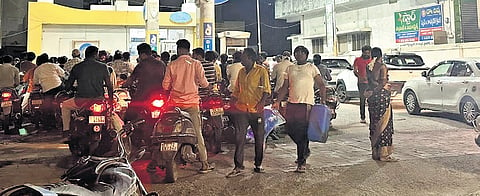

KHAMMAM: Petrol and diesel shortages have forced the closure of several refuelling stations across Khammam and Bhadradri Kothagudem districts over the past few days, causing inconvenience to the public and disrupting agricultural activities.
Operators said nearly 50 petrol bunks in the two districts have shut due to supply disruptions from oil marketing companies. While rural outlets had been operating intermittently for the past two months, the situation worsened over the last three days, with many stations ceasing operations completely.
The disruption is reportedly linked to global developments, including tensions involving the US, Israel and Iran, and issues affecting oil transportation through the Strait of Hormuz. Fuel supplies to the region are typically handled by HPCL, BPCL and IOCL. However, tanker movement has stalled over the past three days, according to operators.
Dealers said diesel supply has been particularly affected, leading to a cascading shortage of petrol as well. Some urban fuel stations are currently selling premium petrol, but stocks are expected to last only for another day or two.
The shortage has significantly impacted ongoing paddy harvesting. With rural refuelling stations shut, farmers are travelling to towns carrying cans in search of diesel, often waiting for long hours. Harvesting machinery has been left idle in fields due to the lack of fuel.
At places where diesel stocks arrived, long queues of tractors and vehicles were seen, with people purchasing fuel in cans and bottles. Transactions, often ranging between Rs 2,000 and Rs 4,000, have led to delays and extended waiting times.
Taking advantage of the scarcity, some private traders have reportedly been selling diesel at inflated prices of up to Rs 125 per litre.
M Gopala Rao, state vice-president of the Petrol Bunk Owners Association (Khammam), told TNIE that reduced supply from oil companies and inadequate stock had forced closures. He added that the issue would be taken up with district collectors, and efforts are underway to coordinate with companies to restore fuel supply for essential needs.
