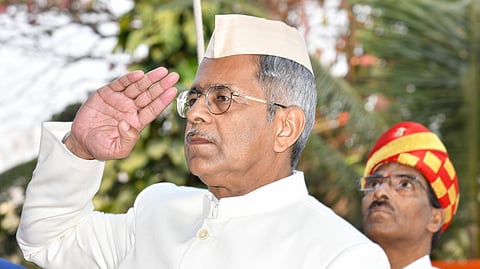

HYDERABAD: Telangana High Court Chief Justice Aparesh Kumar Singh has stressed the need for effective, timely and specialised mechanisms to resolve disputes arising in the rapidly evolving telecom, broadcasting, airport tariff and cyber sectors.
Addressing a seminar on “Mechanisms for Resolution of Disputes in Airport Tariffs, Telecom, Broadcasting and Cyber Sectors” here, Justice Singh highlighted the growing importance of specialised adjudicatory institutions in handling technically complex regulatory disputes.
Tracing the evolution of telecom dispute resolution, he noted that the establishment of the Telecom Regulatory Authority of India (TRAraI) in 1997 and the Telecom Disputes Settlement and Appellate Tribunal (TDSAT) in 2000 marked significant milestones following the liberalisation of the sector. TDSAT’s jurisdiction subsequently expanded to broadcasting, cable services and airport tariff matters.
Justice Singh said specialised adjudication must balance regulatory autonomy, technical expertise and judicial accountability. Referring to the Supreme Court’s ruling in L Chandra Kumar v. Union of India, he emphasised that tribunals remain subject to constitutional judicial review by the High Courts and Supreme Court.
He also underlined the importance of speedy dispute resolution, observing that prolonged litigation can undermine regulatory objectives and create uncertainty for businesses and consumers. He supported mediation and consensual settlements as efficient alternatives in specialised disputes.
TDSAT Chairperson Justice D N Patel, in his opening remarks, highlighted the tribunal’s role in providing specialised and time-bound remedies. He explained that under the Information Technology Act, claims up to `5 crore are initially handled by designated adjudicating officers, with TDSAT serving as the appellate forum, while claims exceeding `5 crore fall under the jurisdiction of competent civil courts.
