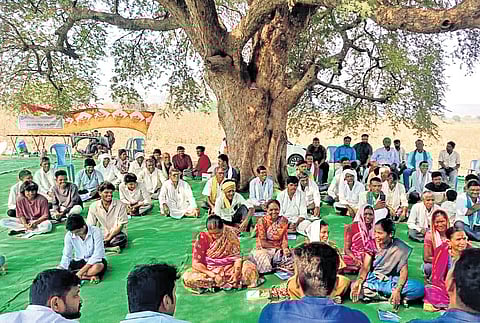

ADILABAD: While modern agriculture races towards hybrid seeds and higher yields, farmer Kendra Balaji is looking in the opposite direction — back to the seeds his elders once nurtured. In the Kerameri mandal of Komaram Bheem Asifabad district, Balaji has emerged as a quiet champion of traditional seed revival.
Through gatherings called Pantala Jatharas, he brings together farmers to exchange, celebrate and preserve indigenous crop varieties that are slowly disappearing.
Under the shade of a tree in Pedda Sakeda village, farmers from nearby mandals recently gathered with small packets of seeds — sajalu, ragulu, white jowar and sweet red gram. Many of these varieties have little presence in mainstream markets today, but continue to hold value for local communities. “In the rush towards modern farming, we are losing the seeds our elders cultivated,” Balaji tells TNIE. “These crops may not always have a big market, but people still value them locally,” he adds.
Balaji himself cultivates organic crops on about eight acres and sells the produce through local networks, often delivering directly to customers. He also grows fruits such as mango and apple, though he points out that the lack of proper market access remains a major challenge for farmers like him.
The Jathara also drew experts from institutions such as ICRISAT, who spoke to farmers about the benefits of organic cultivation and soil health. They explained how traditional seeds can help improve soil fertility without relying on chemical inputs.
Dr Chetan Kumar from the National Bureau of Plant Genetic Resources (NBPGR) proposed setting up a community seed bank to preserve indigenous varieties and ensure they remain available for future generations.
For Balaji, the effort is not just about farming; it is about memory, identity and resilience. Each seed, he believes, carries a story worth saving.