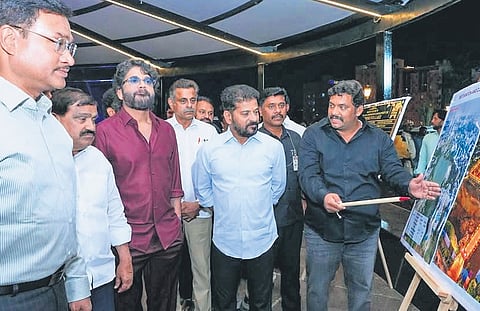

HYDERABAD: Chief Minister A Revanth Reddy on Wednesday said the state government was taking bold steps to protect water bodies and secure a better future for generations to come, even if the measures caused temporary hardship to some people. He was speaking after inaugurating the rejuvenated Thammidikunta lake, restored by HYDRAA.
Expressing concern over Hyderabad’s deteriorating ecology, he recalled that the city, once known for its rocks and lakes, had 1,372 tanks, nearly half of which had disappeared over the years. Encroachments on lake beds and the destruction of natural water bodies had disrupted drainage systems, resulting in waterlogging and traffic congestion even after moderate rainfall, he said. Revanth said Thammidikunta, which had shrunk to 14 acres due to encroachments and neglect, had been restored and expanded to 30 acres. He praised actor Akkineni Nagarjuna for voluntarily handing over two acres to the government for the restoration of the lake.
Calling him a “real-life hero”, the chief minister said his gesture had contributed to the lake’s revival.
‘Work from Thammidikunta’
Revanth said lake restoration was part of the government’s broader effort to make Hyderabad a global city while protecting its natural resources. “Until yesterday, people spoke about Shilparamam. From today, they will speak about Thammidikunta,” he said. In a lighter vein, he suggested that the lake could become a destination for professionals working in the IT corridor, with “work from home” giving way to “work from Thammidikunta”.

No one dares name their kid after Musi: CM
Revanth asked Cyberabad police and municipal officials to ensure adequate security and civic infrastructure so visitors could use the facilities safely and a ‘lake economy’ could develop around the water body.
He also suggested planting a Jammi tree near the lake so that traditional Dasara gatherings such as Alai Balai could be held there.
The chief minister said the Musi rejuvenation project was essential to restore the river’s ecological health. The river had since become heavily polluted, affecting residents, particularly in Nalgonda district, he said.
“Our culture values naming our daughters after sacred rivers such as Ganga, Yamuna and Saraswati, but no one dares to name their child after the polluted Musi today,” he said.
Revanth said the government’s objective was to restore the natural character of lakes and rivers, prevent encroachments and leave a healthier environment for future generations. “We need to clean and rejuvenate the Musi. It is not merely about beautification,” he said, adding that the first phase of the project would begin shortly.
Assuring affected families that the government would protect their interests and ensure they did not suffer losses, he appealed to political parties and public representatives to rise above differences and support the initiative. Politics should be confined to elections, while development required collective participation, he added.