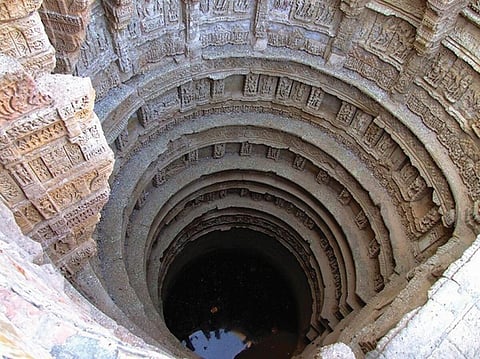

HYDERABAD: In an area where borewells have to be drilled to depths of 600-700 feet to access groundwater, a stepwell barely 40-45 feet deep near the Musi River continues to hold water. The contrast underscores the potential of traditional water-harvesting systems at a time when groundwater levels are declining. It also raises an important question: are these historic structures being revived as functional water sources or merely preserved as heritage monuments?
Telangana has over 600 stepwells, of which around 350-400 are reportedly in a dilapidated state. Hyderabad has more than 160 stepwells, of which 25 have been restored. Conservationists have urged the government to geo-tag all stepwells to ensure their protection.
However, conservationists say restoring stone structures, removing silt and repairing steps are only the first stages. Their catchments, including streams, ponds, feeder channels and shallow aquifers, must also be protected to make them functional water sources.
Water conservationist and founder of The Rainwater Project Kalpana Ramesh said conservation should begin with understanding how water reaches a stepwell and restoring its natural drainage network. This involves identifying feeder channels, removing obstructions and ensuring rainwater enters without carrying sewage, plastic or construction debris.
Citing Bansilalpet, she said a water channel feeds six water-conservation interventions beneath the park. These include silt chambers, dug wells and an injection borewell. Similar systems, with filtration arrangements and silt traps, could be replicated around other stepwells to facilitate recharge.
Conservation architect Arunima Shankar said protecting shallow aquifers was equally important, particularly in Hyderabad, where concretisation and construction have restricted natural groundwater recharge. Basement excavation often involves pumping out groundwater, while foundations and hard surfaces prevent rainwater from percolating into the soil.
Water quality is another concern. A restored stepwell in Begumpet began holding water again but was found to contain highly contaminated water due to pharmaceutical waste from upstream industries.
