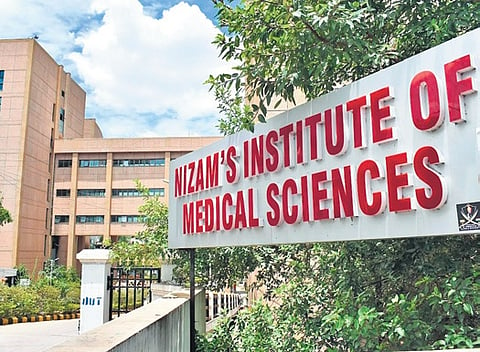

HYDERABAD: Surprise checks by the Anti-Corruption Bureau (ACB) at Nizam’s Institute of Medical Sciences (NIMS) have uncovered irregularities ranging from unauthorised storage of medical implants worth Rs 5 crore to questionable patient billing and suspected collusion in tenders.
The checks were conducted on October 29 and November 2, along with teams from TG Safe, the Drugs Control department and the Labour department.
During inspections of five operation theatres (OTs), officials found that vendors had stored implants and other supplies worth around `5 crore` in cupboards near the OTs and their sub-stores without authorisation.
Doctors and nursing staff allegedly allowed vendors to keep the stock on the premises and obtained implants directly from them instead of raising indents with the main store.
After using the implants, doctors submitted utilisation certificates and vendors’ invoices to the main store for billing.
The ACB said the practice violated prescribed procedures and left room for collusion, including the possibility of submitting utilisation certificates for implants that had not been used.
More lapses were noticed in patient billing. Officials found bills being processed after discharge, mostly in cases covered under Aarogyasri.
In some instances, billing continued even three months after a patient’s death. Entries worth around Rs 66 lakh were made after patients were discharged during July, August and September.
The checks also found unusually high consumption of surgical supplies. In one case, records showed that 800 gloves had been used for a single patient in a week. Most billing and consumption discrepancies involved Aarogyasri patients.
The ACB also found that the tender process for manpower services had not been completed between 2019 and 2025.
Irregularities in worker recruitment and their classification as semi-skilled employees raised suspicions of possible collusion.
The main canteen was found operating in unhygienic conditions, with expired food items and without mandatory FSSAI registration. Officials also flagged labour law violations and suspected collusion among bidders in the canteen tender.
At the medical shops, mandatory sales records were missing and unregistered workers were employed. Their allotment process is also under scrutiny.
In the case of security services, officials found repeated contract extensions and delays in finalising tenders. A bank guarantee of `28.13 lakh furnished by a defaulting agency had not been forfeited.
The ACB seized note files, agreements and other documents for further verification. NIMS director did not respond to calls seeking comment.
