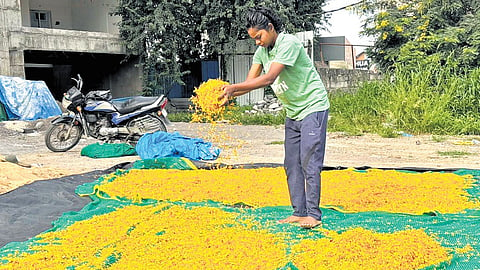

HYDERABAD: Around 7,000 metric tonnes of flower waste generated during Ganesh Chaturthi and Bathukamma celebrations have been collected by the Malkajgiri Municipal Corporation (MMC) and sent for recycling to manufacture incense sticks and dhoop sticks.
The initiative, undertaken in collaboration with Pakka Organics, involved the separate collection of flowers offered during religious ceremonies and those brought along with Ganesh idols for immersion. Instead of allowing the flowers to mix with regular garbage, the civic body collected them at designated centres for processing into useful organic products.
MMC Commissioner Vinay Krishna Reddy said the scientific collection and recycling of flower waste had helped protect the environment while reducing the burden on municipal waste management. The initiative aims to turn waste generated during religious events and festivals into valuable resources through reuse and recycling.
Sanitation Additional Commissioner Raghu Prasad said the corporation had collected approximately 7,000 metric tonnes of flower waste under the programme. Of this, more than 6,400 metric tonnes were generated during Ganesh immersion celebrations, while around 400 metric tonnes were collected during Bathukamma.
To facilitate collection, MMC, in partnership with Pakka Organics, established special kiosks at major immersion points, including Safilguda Lake and other prominent locations. Flowers offered during religious ceremonies and those accompanying Ganesh idols were collected separately at these centres for further processing.
The collected flowers were dried and converted into powder by Pakka Organics. The powder was then mixed with herbs, natural resins, wood powders and plant-based binders to manufacture incense sticks and dhoop sticks.
The corporation said the initiative also emphasised waste segregation, resource recovery and public participation in sustainable waste management.
