
HYDERABAD: Maharashtra and Telangana have agreed to form a committee headed by the principal secretaries of their irrigation departments to study the proposed height of the Tummidihatti barrage on the Pranahita river, water availability and submergence implications.
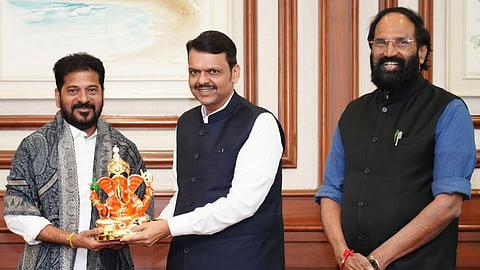
The decision followed a meeting between Telangana Chief Minister A Revanth Reddy and his Maharashtra counterpart Devendra Fadnavis at Sahyadri guest house in Mumbai on Monday.
Fadnavis responded positively to Telangana’s request for cooperation to increase the barrage height and said Maharashtra would conduct an independent study to assess the proposal. The committee will examine the proposed height, water availability, land likely to be submerged in Maharashtra, affected agricultural areas, compensation requirements and other technical aspects.
Fadnavis said officials from both states would discuss any objections Telangana might have to Maharashtra’s findings and estimates. Expert opinions would also be sought if necessary, with further decisions based on technical assessments and facts.
He suggested that officials and technical experts from both states work together to establish a clear timeline and roadmap for further discussions and necessary action. Subsequent meetings, technical consultations and the way forward would be worked out by the officials and experts of the two states.
The Maharashtra chief minister emphasised that several technical, environmental and administrative steps would have to be completed before a final decision could be reached.
Fadnavis said that if the project did not adversely affect Maharashtra or its people, his government would have no hesitation in supporting Telangana in meeting its water requirements, keeping the larger national interest in mind.
He said both states should approach the issue in a spirit of friendship, brotherhood and good neighbourly relations. He also referred to Maharashtra’s experience in resolving several interstate issues through mutual discussions and cooperation with neighbouring states.
Fadnavis said the Central Water Commission (CWC) would continue its technical examinations and studies within its jurisdiction.
Tummidihatti will help in transforming neglected tribal regions: Revanth
During the meeting, Revanth highlighted the historical, cultural and social ties between Telangana and Maharashtra, including their shared heritage under the erstwhile Hyderabad state. He drew attention to the long-standing problems faced by indigenous communities in the forested and economically backward Adilabad region.
Referring to tribal leader Komaram Bheem’s historic ‘Jal, Jangal, Zameen’ struggle, the chief minister said generations of people in the region had aspired to better access to irrigation and drinking water.
He said the Tummidihatti barrage was not merely an irrigation project but could help transform one of the country’s historically neglected tribal regions, both socially and economically. Revanth urged Maharashtra to cooperate in the larger interest of developing backward areas and improving the lives of tribal communities.
He also highlighted the strategic importance of Adilabad, saying the proposed defence and civilian airport facilities there could boost development in the erstwhile district and adjoining parts of Maharashtra. The barrage, he added, could serve as a physical link between the two states and strengthen connectivity and economic cooperation among communities on both sides of the border.
Fadnavis acknowledged the region’s developmental needs and expressed his willingness to revisit Telangana’s request. He also referred to his personal and cultural association with Telangana and the Adilabad border region, mentioning that his grandmother speaks Telugu.
Both chief ministers reiterated their commitment to the development of all regions, particularly economically backward areas and historically disadvantaged communities.
Telangana’s case
At the beginning of the meeting, Telangana Irrigation Minister N Uttam Kumar Reddy made a presentation on the historical significance, cultural heritage, social conditions and economic challenges of the erstwhile Adilabad district.
He said tribal communities had long been deprived of development opportunities and that the resulting socio-economic conditions had contributed to several challenges, including the emergence of Naxalism in the region.
Uttam said efforts to provide irrigation to the region had been under way since October 6, 1975. Despite several initiatives, proposals and discussions over five decades, the aspirations of the people remained largely unfulfilled. He explained that the 2016 agreement, which provided for a barrage height of 148 metres, would not adequately meet the region’s irrigation requirements.
Citing energy requirements, power costs, environmental concerns, climate change and long-term operational sustainability, the Minister said alternatives that maximised gravity-based water conveyance needed to be explored.
He presented the technical and operational advantages of constructing the barrage at 152 metres, describing it as the most viable option to meet the region’s water requirements. Telangana was willing to compensate farmers in Maharashtra for agricultural land affected by submergence in accordance with the state’s land acquisition guidelines and compensation policies, he said.
Invite to Global Summit
Chief Minister A Revanth Reddy has invited his Maharashtra counterpart Devendra Fadnavis to attend the Invest Telangana Global Summit, scheduled for December 7-9 at Future City in Hyderabad. Fadnavis showed interest in the Summit and said that he would try to attend the event.
