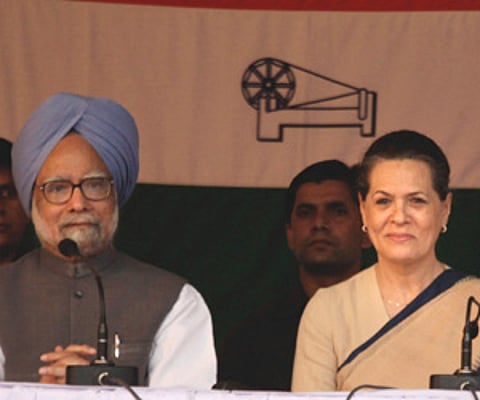

The politics of development, which was UPA’s gravy train in 2009, is dividing it ideologically now. At the centre of the maelstrom is the Direct Benefit Transfer (DBT) scheme, which is expected to bring subsidies to BPL families directly by eliminating middlemen. The split between two top Indian economists—Amartya Sen and Jagdish Bhagwati—has led to an open war between the Big Three of the PMO, Planning Commission and Finance Ministry versus the Social Sector ministries of Rural Development, Social Justice and Empowerment and Health and Family Welfare. The fallout has affected the two economic power centres in the government: the Sonia school of welfare politics and the Manmohan school of growth. The pre-election scheme—Bhagwati had called it a “game-changer”— envisages Central government transfer of Rs 3.2 lakh crore a year to 10 crore families. The Prime Minister claims that the DBT, which bears the strong imprint of his Cambridge classmate Bhagwati, should be in Delhi’s hands and not the state’s. Sen opposes this.
“The rift on the DBT clearly reflects the confusion of the Central government on economic policies. There are clearly two lines of thinking within. One belonging to the Bhagwati line of economic development that focuses more on growth than distribution and the other preferring the Sen model which gives more focus to distribution than growth,’’ said an academic-turned-politician within the government. He said Bhagwati’s influence on Manmohan’s economic policies is very strong and this includes economic liberalisation, which really changed the face of the Indian economy.