
From pre-recorded messages of then Prime Minister Atal Bihari Vajpayee bombarding cell phones and landlines of voters across the country during the 2004 Lok Sabha elections, to emails landing in voters’ accounts in 2009, to social media platform like Facebook, Twitter and chat applications like WhatsApp being used to woo the first-time voters and tech-savvy youngsters for the 2014 polls, the technology has come a long way for the BJP. Anyone familiar with the intricacies of 140-word warfare through Twitter would know that it’s a full-fledged battle between the BJP and the Congress. No tweet fired from one side goes unanswered.
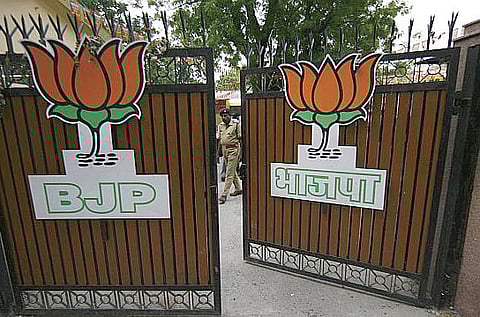
The war is only set to intensify as the BJP will soon set up its strategic hub—war room—at the party’s headquarters, 11 Ashoka Road. It will be a homecoming of sorts as the BJP’s war room is set to be established at the party’s headquarters after a decade.
“In 2004, the BJP war room operated out of master strategist Pramod Mahajan’s 7 Safdarjung Road residence. Five years later, in 2009, it was set up at 26 Tughlaq Road. Now we are shifting to 11 Ashoka Road,” a senior BJP leader said. We lost the earlier two polls. We hope returning to party office will help us winning polls as we did in 1998 and 1999, he added.
The Congress has converted 15 Rakabganj Road into its war room, after operating out of 99 South Avenue for two elections it fought in 2004 and 2009. While the Congress war room has started functioning after it hired professionals to run its campaign, the BJP is relying on its army of “committed” volunteers.
The BJP has already appointed 20 election campaign sub-committees which will handle different aspects of the elections; leaders drawn from these are likely to become part of the war room. BJP’s strategy is guided by its prime ministerial candidate Narendra Modi who has been insisting on exploiting potential of social media to reach first-time voters.
“There are 165 parliamentary constituencies which have high penetration of smartphones and the Internet. Naturally, our focus would be on designing content specific to these constituencies depending on the social and political situation there. Like, for example, some constituencies have water problem, others economic or even social issues,” a BJP leader told The Sunday Standard.
According to BJP’s action plan, the party’s war room will have a team of 100 members who would monitor media, send out campaign material and respond to attack from the Congress. “Around 20 people will be BJP leaders who would act as strategists having knowledge of different subjects. They should have at least covered one general election and worked with the party. Their credentials would have been vouched by other senior leaders,” a BJP leader said. Though we are not insisting, they should have a postgraduate degree, he added.
These strategists along with the senior party leaders would devise messages and respond to any emergency. For any negative story in the media, an appropriate response will be prepared, while any positive issue reported about the party would be amplified through social media and emails.
Apart from these strategists, there would be technology geeks in 18-24 years age group who would work on 25 computers in three shifts, sources said.
The war room will be aided by a seven-tier structure going right up to the booth level across the country. The national team at the centre (100 members) would be assisted by the state team (around 25 members); zone team comprising different regions in a state; district level or parliamentary constituency level team; assembly constituency level team; ward level team and finally the booth level team.
BJP IT cell co-convenor Vinit Goenka said, “We have identified volunteers who would be part of our team. We held a meeting on September 6-7 to identify people who would work with us. The team has been identified.” He insisted that all of the selected people were volunteers as they would like to see change during next elections under Modi’s leadership.
Sources said the BJP has identified 17,000 members who would be part of this structure. The party would rely on two strategies—P2P (party to party) and P2V (party to voters). The P2P communication would require using intranet, sms, emails, WhatsApp to pass on the message. “We have tried and tested the system. If any message is sent from the national team, it takes around 49 seconds to reach the booth level volunteer after passing through various stages,” sources said.
The party would directly engage with voters through content generated on the Twitter, blogs, Facebook, radio and TV ads.
Sources said the BJP would focus on 362 constituencies where it has either won elections at any point of time, performed well in elections, or where any of its allies have been elected, or has pocket of influence. We would be focusing on these Lok Sabha seats to achieve the target of 272 which have been set for us, a leader said.