
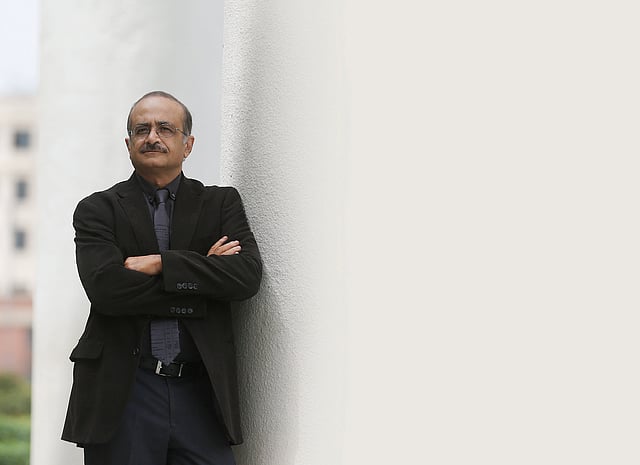
An uncongested, cleaner and greener city with wide roads, less traffic jams and a robust public transport is how Shiv Nadar University’s Founding Vice-Chancellor Nikhil Sinha remembers the Delhi he lived in back in the 80s.
“I have very fond memories of growing up in Delhi. I finished high school at St. Columbus and went to college at St. Stephen’s. It was close to the ridge area and we would often go there for walks,” he says. Sinha, who has an MA and PhD in communication from the University of Pennsylvania, worked for the Ministry of Information and Broadcasting before leaving for the US to study.
He cherishes the lifelong friendships he forged in the capital during these years. “I continue to remain connected with the friends I made in school and college, because of which coming back to Delhi has not been so difficult even after all these years,” says Sinha, who returned to India in 2012 and lives in Noida. His father was in the Indian Army. “I lived in Delhi from age 17 to 27. It is the closest place to home, I would say,” he adds.
Sinha says the melting pot of Delhi showcases India’s multiple cultures and ethnicities. “Delhi is the switchboard of India. As it is the capital and a huge centre of business, you come across different Indias in this melting pot,” he adds. Sinha, who was associate dean and faculty member at the University of Texas, is a member of several corporate boards and FICCI’s higher education committee.
For Sinha, not only is Delhi a microcosm of India, but it also reflects the ills that are plaguing development in the country. “Two hundred million people will move to cities from rural areas by 2030. The National Capital Region would be the second-largest urban sprawl in the world by 2030. You can see Delhi coming apart at the seams in terms of road infrastructure and traffic,” he says. “Delhi has become the most polluted city in the world.”