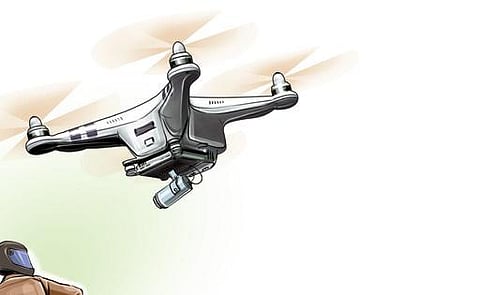

CHANDIGARH: The hi-tech Chinese drones, which can remain airborne for long hours and fly at a high altitude, have modern artificial intelligence features. Usually, they take off from near Lahore, Kasur and Sheikhpura in neighbouring Pakistan and drop drugs, arms and ammunition mainly in the border areas in the Amritsar sector of Punjab and return as they are operated by smugglers based in Pakistan.
The Border Security Force (BSF) has identified 200 dropping zones across the Intentional Border on the Indian side in Punjab. This year, security agencies have shot down 26 unmanned aerial vehicles (UAVs) and have sighted 165 of them in the first six months of the year.
Sources said the drones are generally operated between 10 pm to 4 am, preferably during dark nights. They are flown at a height of 1,500-2,000 meters to avoid detection by security agencies. When a drop is to be made, the drones are lowered to 700 meters.
An official said, “The drones are GPS-enabled and the coordinates are fed into them by the person operating them from across the border so that they drop the consignment of drugs, arms and ammunition at the accurate spot besides there is illuminating device is pasted on the consignment so that the smugglers in India can spot package after it is dropped, as they send only the coordinates to their counterparts in Pakistan.’’

Sources said the drones carry a payload of 5-7 kg which includes drugs and small weapons including AK-47s. Out of the shot-down UAVs, many are China-made. A Chinese firm DJI is the manufacturer of these drones.
“The Matrice 300 is more reliable than the assembled drones, as this quadcopter with a weight of 6 kg, can carry payloads up to 2.7 kg and has a flight time of 55 minutes. It ensures precise drops at specified locations. It is equipped with high-definition cameras that are capable of live recording and taking pictures. Besides it can carry up to three payloads simultaneously,’’ said an official.
Sources said that the operator of these drones sitting in the neighbouring country can remotely delete all data of this device once it is shot down or seized. Therefore, tracking down their earlier flight path becomes difficult. Last year on December 25 a quadcopter was shot down near the Rajatal border outpost in Amritsar district.
The forensic analysis of the drone found that it flew in Fengxian district in Shanghai China on June 11 last year and later 28 times it was flown from September 24 to December 25 in the Khanewal district of Punjab in Pakistan. The BSF has earlier said a number of drones shot or recovered were made in China.
It is learnt that BSF has set up a forensic laboratory for drones in Delhi where it culls out data from the chips of the seized drones and studies their flight path and other scientific details. Earlier this month, a drone carrying 6 kg of drugs which flew from Lahore crashed near Rasoolpura village near Lahore in Pakistan.