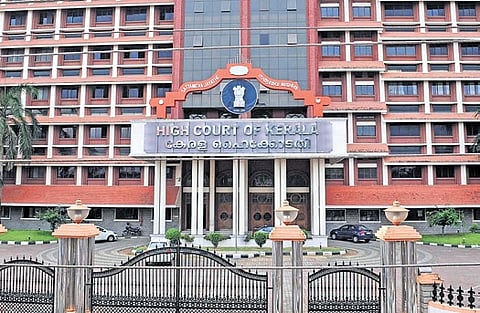

KOCHI: The Kerala High Court has held that a pillion rider cannot be held responsible for the negligence of the rider of the vehicle on which they were travelling. The court observed that contributory negligence can be attributed only when both parties are shown to have been at fault, and such a finding must be supported by cogent and convincing evidence.
Justice Anil K Narendran passed the order on a petition filed by Santhosh, a resident of Thrissur, seeking compensation of Rs 2 lakh for the injuries sustained in a motor accident in 2004. At the time of the accident, the petitioner was travelling as a pillion rider on a two-wheeler.
Considering the plea, the court held that the claimant, a pillion rider, cannot be burdened with the rider’s contributory negligence. It therefore set aside the decision of the Motor Accidents Claims Tribunal (MACT), Ernakulam, to reduce the claimant’s compensation by 50% on account of the rider’s negligence. The MACT had assessed the total compensation under various heads at Rs 57,922.
However, after deducting 50% towards contributory negligence, it awarded the claimant only Rs 28,961, along with interest. The petitioner contended that the compensation awarded by the Tribunal was not “just and reasonable” and required enhancement. He argued that the Tribunal’s finding on contributory negligence and the consequential deduction of 50% of the compensation were legally unsustainable.
The petitioner submitted that he was entitled to the entire compensation awarded by the Tribunal, as well as the enhanced compensation claimed in the appeal, without any deduction.
Referring to a Supreme Court judgment, the High Court observed that the principle of contributory negligence requires a specific inquiry into the conduct of the injured person to determine whether and how they contributed to the accident.
Such negligence cannot be inferred vicariously from the conduct of the rider of the vehicle, it said. Holding that the Tribunal had erred in attributing contributory negligence to the claimant, the HC ruled that the petitioner was entitled to the full compensation of Rs 57,922, together with interest at the rate of 8% per annum.
