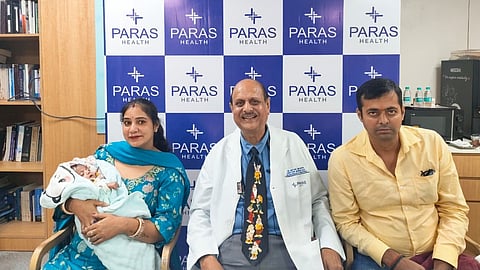

NEW DELHI: A baby girl born prematurely at just 27 weeks of gestation, weighing a mere 900 grams, has been discharged from Gurugram’s Paras Health after spending nearly eight weeks in the NICU and overcoming a series of life-threatening complications.
Nikki, the newborn, had developed severe respiratory distress syndrome shortly after birth due to immature lungs and a deficiency of surfactant.
She was placed on mechanical ventilation and administered surfactant replacement therapy. However, her condition was further complicated by early-onset sepsis, which progressed to severe shock and disseminated intravascular coagulation (DIC), a serious condition affecting blood clotting.
She required blood pressure-supporting medication, antibiotics and transfusions of fresh frozen plasma, red blood cells and platelets. She also suffered episodes of pulmonary haemorrhage during the critical phase of her illness.
However, eventually her condition stabilised, her blood parameters returned to normal and respiratory support was reduced from mechanical ventilation to non-invasive ventilation and subsequently oxygen through a nasal cannula.
Alongside intensive medical treatment, the NICU team also brought in developmentally supportive care and neuroprotective practices aimed at reducing stress and supporting brain development in extremely preterm infants.
One of the interventions used in her treatment was octopus therapy, in which a soft, yarn-made octopus was placed near the baby after being kept close to her mother to carry her familiar scent. Its tentacles offered the baby something to hold while she remained in the incubator.
The hospital also stated that the team had observed that the intervention helped her settle, with her heart and respiratory rates decreasing while oxygen saturation remained stable.
Dr Amitava Sengupta, director of neonatology at Paras Health, said the focus was not only on helping extremely preterm babies survive critical complications but also on protecting their developing brains and improving long-term neurological and functional outcomes.
