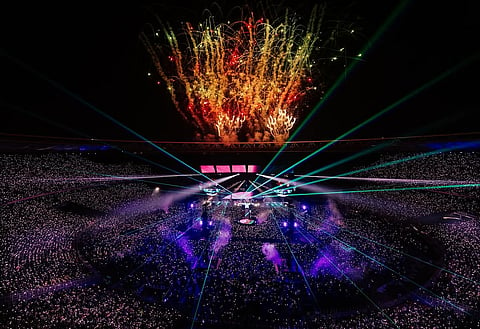

On Sunday, Bengaluru was under the spell of rock and roll as Guns N’ Roses arrived in the city for their fifth outing in India.
And youngsters in Thiruvananthapuram, who usually travel across the country to watch international artists, ask a pertinent question. Why are no big concerts being held in the city?
For Thiruvananthapuram, the idea of hosting a major music festival seems to invite as much scepticism as excitement. In an online discussion about the capital becoming a concert destination, one user gave a tongue-in-cheek reality check: “Even the thattukadas are not open after 10 pm. And you expect an international music concert here?”
The quip hints at the uphill task of trying to put the capital on the live music map.
Aishwarya Sivadas, an MBA graduate from Thiruvananthapuram, says the idea that people here won’t spend on concerts is not true. She travelled to Ahmedabad with friends to watch Coldplay, spending on tickets, flights and accommodation. Several others in her circle have also made similar trips, she says.
“Our city has a large young population and a strong music culture. With beautiful places such as Varkala and Kovalam, Thiruvananthapuram also has the potential to host music festivals. The interest is there, but such events need to happen more often,” she says.
However, for organisers, the response to a few high-profile shows is not enough to guarantee that a large concert will sell out.
Adwaith S, founder of CTLG, an entertainment communications company, says promoters remain wary of the financial risk. “Bringing an international artist involves substantial investment, and promoters need to sell out the tickets. Many are hesitant to take the risk in a city where the potential has not been explored much,” he says.

He points to Bengaluru, where a regular calendar of international performances developed over time. Nightlife, smaller parties, club events and live shows helped build the scene, he says.
“Thiruvananthapuram is also going through a similar transition, with changing lifestyles and spending habits likely to draw more international artists in the coming years. There is, however, a difference between attracting a crowd for one major performance and building an audience that consistently buys tickets,” he says.
Vaishak S Kumar, manager of Avial, says Keralam’s long dependence on free concerts has made that transition difficult.
“Malayalis have grown accustomed to watching artists perform for free, particularly during Onam celebrations and other public events. A ticket-paying culture is only emerging among younger people,” he says.
Still, Thiruvananthapuram has had its share of successful ticketed shows.
The problem, he says, is that such opportunities remain limited, while promoters cannot always predict how well an event will do.
Young people travelling to concerts in other cities is encouraging, but Vaishak cautions against treating every event as a potential Coldplay-scale success.
“Gen Z is increasingly willing to spend on live experiences, with the fear of missing out also playing a part. But we cannot compare every event with Coldplay, which is a global sensation. Audiences are also paying for the production quality and the overall concert experience,” he says.
A stage of its own
Another thorn is the shortage of venues suited to large productions, says organisers. “The city has three venues —Nishagandhi, Poojappura Maidanam and the space at Lulu Mall. However, even Nishagandhi can accommodate only 3,000 people. Larger concerts need grounds with better facilities and parking. If we can make use of Varkala’s potential, its beaches and cliffs could provide interesting settings for music festivals,” says Sujith Unnithan, director of Wonderwall Media.
For shorter India tours, promoters usually choose Tier I cities like Mumbai, Delhi or Bengaluru, he adds. “National sponsors also see Keralam as a relatively small market and allocate only a limited share of their budgets,” Sujith adds.
For Devan Narayanan, a member of heavy metal band Mooted, the challenge lies at the grassroots level. Keralam, he says, lacks the infrastructure to support its own metal bands, let alone international performers.
“International bands come with specific technical needs, and meeting those is difficult here. We lack the necessary equipment, including proper lighting, sound systems, and venues. If we do not have adequate spaces for our own musicians, how can we expect international artists to come here?” he asks.
Business behind the music
Sujith identifies Keralam’s liquor policy as another major obstacle. He says liquor brands are among the important sponsors of international concerts in India, but there are restrictions on selling liquor at event venues.
“Organisers can get a one-day licence to serve liquor, but not sell it. Liquor sponsorship and sales are important revenue sources for live events, and this makes organising concerts in Keralam financially difficult,” he says.
He also cites the taxes levied on concert tickets, including GST and an additional 10% entertainment tax in some local bodies, as well as the difficulty of securing permissions from multiple departments.
Organisers need cooperation from the police, local bodies and the government, he says, but often find the process cumbersome. These costs and uncertainties can make promoters think twice.
“If the liquor policy becomes more flexible, permissions are streamlined, and the tax burden is addressed, our city could host many more concerts. We have an audience willing to travel for good artists. What is missing is an ecosystem that makes these events viable,” Sujith says.
Changing that perception will need people willing to take risks, and better support from the government, says Adwaith.
According to him, the government needs to understand the economic potential of the live entertainment industry.
“A well-organised concert creates business for several sectors, not just the artist and the promoter,” he says.
The audience is there, and the culture is changing. We need to create the conditions for the industry to grow, he concludes.