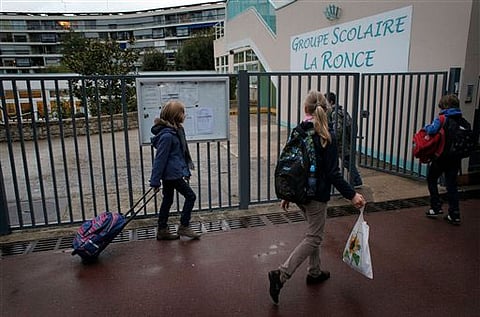

Frenchchildren go to school four days a week. They have about two hours each day forlunch. And they have more vacation than their counterparts almost anywhere inthe West.
It may sounda bit like the famously leisurely work pace enjoyed by their parents, most ofwhom work 35 hours per week as dictated by law.
But thenation's new government says elementary school kids risk classroom burnout, andis moving to help them cope. The issue: French school days may be relativelyfew, but they are at least as long as a day of work for adults. Even6-year-olds are in class until late into the afternoon, when skies are dark,attention flags and stomachs rumble.
As acandidate, President Francois Hollande promised to change things by adding afifth day of classes on Wednesday while shortening the school day. For France,it's something of a revolutionary idea that would overturn more than a centuryof school tradition. The thinking is that the days are too full for youngchildren under the current system and that Wednesday free time could be put tomore productive use.
"Francehas the shortest school year and the longest day," Hollande said at thetime, promising change.
Hiseducation minister, Vincent Peillon, will decide this month how to carry outthe reform. He has said he may also compensate for a shorter school day bytrimming France's sacred summer vacation. A panel of experts will present theirconclusions on Friday, and the president is expected to address the issue onTuesday.
No proposalaffects tradition — and potentially family and municipal budgets — as much aswhat the French call changes to the "scholastic rhythms."
There's beena midweek break in French primary schools dating back to the 19th century, agovernment concession to the Roman Catholic Church, which wanted children tostudy the catechism on their weekday off. In today's secular France, Wednesdayscurrently are a blur of sports, music, tutoring for families of means, or ascramble for working parents struggling to get by — who must either find asitter or send their kids to a full day at a state-run "leisurecenter."
Thingsaren't exactly easy for French kids.
Despite longsummer breaks and the four-day school week, French elementary school studentsactually spend more hours per year in school than average — 847, compared with774 among countries in OECD, a club of wealthy nations. But the time iscompressed into fewer days each year. The French school day begins around 8:30and ends at 4:30 p.m., even for the youngest, despite studies showing theability of young children to learn deteriorates as the day goes on.
France ranksbelow most of its European neighbors and the United States in results oninternational tests.
But manyparents are afraid that the changes will force them to figure out extrachildcare five days a week, especially at schools where the afterschool programamounts to sitting silently at a desk for two hours or near-chaos in the playareas. Under the education proposal, school would end at lunchtime onWednesday.
"It'scompletely unrealistic," Valerie Marty, president of the national parents'organization, said of the proposed timetable. "They have to figure out whowill take care of the children after school, who will finance it."
In France,the answer is usually the government.
The state isexpected to provide for just about everything education-related: Classes comeunder the national budget, and lunches and leisure are the domain of municipalities.So if school lets out most days at 3:30 p.m., under the plan most recentlyfloated, more working parents than ever would need afterschool care — and townswould have to figure out what to do with restless children. That would almostcertainly involve something more constructive than sitting quietly at desks,kicking around a ball, or playing cards until the evening when parents get outof work.
TheEducation Ministry has proposed more organized extracurricular activities likesports, theater and art to replace the relatively free-form time children nowhave after school. But that means trained staff and, of course, more money fromlocal budgets already strained in difficult economic times.
Marty, whohas three children, proposes something entirely different: lengthening lunch tothree hours.
"Aftera meal, children have a moment when they're tired. They're not ready forintellectual activities and could do something more relaxing," she said,suggesting theater, or quiet time in a library for others. Afterward, she said,classes could resume until evening.
Trimming thehallowed summer break is another tricky proposition. The school year ends atthe beginning of July. Some families take July off, some August. But nearlyeveryone takes a month, and many French families travel for the entire period.
Peillon saidhe was flexible about vacation time: "If the question of vacation isblocking things, I'll propose that the prime minister leave it alone."
EricCharbonnier, an OECD education expert, supports the proposed changes. Hebelieves the current system isn't working for the children most in need of agood education.
"Aschedule with long days and lots of vacation is not one that will help thestudents who are having problems," he said.
PeterGumbel, a British journalist who has lived in France since 2002 and written abook about the country's education system, said the length of the school day isonly part of the problem. He says that French schooling is outmoded, dull andgrinding. His take is clear from his book's title: "They ShootSchoolchildren, Don't They?"
"Youhave to tackle head-on the fundamental questions of the classroom," hesaid, citing "the sheer heaviness of the national curriculum, the enormousamount of hours, the enormous amount of unbroken attention required, and thesheer boredom and tiredness."
