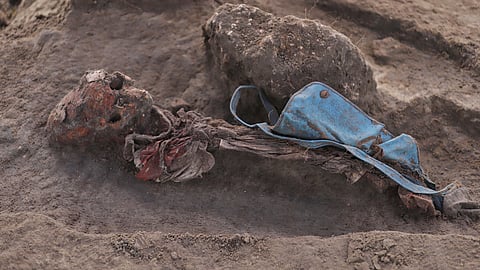

A visit by a European Union delegation to Sri Lanka's Chemmani mass grave site, where it is alleged that civilians who went missing during the civil war were buried, triggered massive outrage among the victims' relatives. The victims' relatives demanded an international investigation into the case.
The visit by the European Union delegation comes amid continuing demands from Tamil families, rights groups and international organisations for an independent international investigation, amid concerns that domestic accountability mechanisms have failed to inspire confidence.
Members of the Association of Relatives of Enforced Disappearances staged a protest and handed over a memorandum to the delegation, urging an international probe into the mass grave.
The protesters included a large number of women, who held placards and photographs of their relatives who are dead, and stood before the delegation.
They have been demanding a probe into the matter by international agencies for a while.
The delegation included ambassadors of the European Union, France, Germany, Italy and the Netherlands. Human rights lawyer Ranitha Gnanaraja said 467 skeletal remains were recovered during 93 days of excavation at the site.
Skeletal remains were first discovered at the site during construction work in February 2025, following which excavations began under judicial supervision three months later.
The excavation has taken place in three phases until now - the latest of them began in April. Gnanaraja said 13 skeletal remains were recovered on Tuesday, including those of three children.
He added that one set of remains found last week appeared to be in a meditative posture. Partly burnt bones, infant feeding bottles, school bags, children's toys, coins and pieces of jewellery have also been unearthed during the excavation.
Sri Lanka's civil war, fought between government forces and the Liberation Tigers of Tamil Eelam (LTTE), started in 1983. The conflict stemmed from longstanding ethnic tensions and the LTTE's demand for an independent Tamil state.
It ended in 2009 after the military defeated the LTTE, but allegations of disappearances and wartime abuses against both parties remain unresolved.
