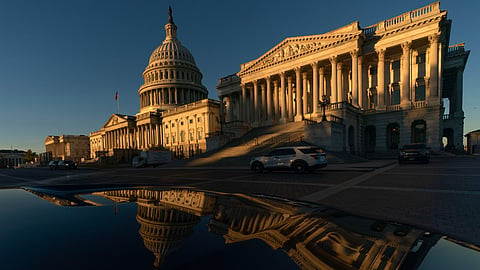

WASHINGTON: US lawmaker Grace Meng on Wednesday slammed the Trump administration’s proposal to impose a new round of tariffs on 14 economies, nearly all from Asia, and vowed to end the “costly” measures when the Democrats gain control of the US Congress next year.
Meng, the chair of the Congressional Asian Pacific American Caucus (CAPAC), said Trump’s tariffs have made life more expensive for Asian Americans, Native Hawaiians, and Pacific Islanders (AANHPIs).
“His (Trump’s) reckless trade wars have hit our nation’s three million AANHPI-owned businesses especially hard, many of which rely on imported ethnic and cultural goods that cannot be produced domestically,” Meng said in a statement here.
From New York City’s Chinatown to Chicago’s Little India to Orange County’s Little Saigon, the AANHPI communities were being crushed by Trump’s failed economic policies and want leaders who will deliver affordability.
“Next year, CAPAC members will reclaim Congress’s constitutional authority under Article I to regulate trade and work to end these costly tariffs once and for all,” Meng said.
She said tariffs on everyday goods and groceries have added additional costs for families, consumers, and small businesses.
As of September 2026, the average household in the US has had to pay an additional USD 4,700 for goods and services due to rising costs under Trump.
The US on Wednesday proposed 25 per cent tariffs on imports from India, with a provision to cap them at 17 per cent if the two countries agree to a bilateral trade deal, giving it a slight edge over Asian competitors.
The USTR said India’s "unreasonable acts, policies, and practices" include industrial plans to expand manufacturing; inadequate labour protections; financial repression policies; sustained market access barriers; and failure to address global excess capacity and production.
“These acts, policies, and practices burden or restrict US commerce by reducing commercial opportunities for US producers and exporters in India and third-country markets; harming the US economy by contributing to lost production, exports, jobs, and investment in the US manufacturing sector; and increasing US economic security risks, including through reliance on NME (non-market economy) inputs,” the USTR said.
India on Wednesday said it is committed to working closely with the US for an early conclusion of a bilateral trade agreement, while rejecting Washington's allegation of having structural excess manufacturing capacity.
