
India has rejected what it described as an “unsubstantiated reference” in a report by the United Nations Special Rapporteur on the rights of Indigenous Peoples, defending its constitutional safeguards and legal framework for protecting the rights of Scheduled Tribes.
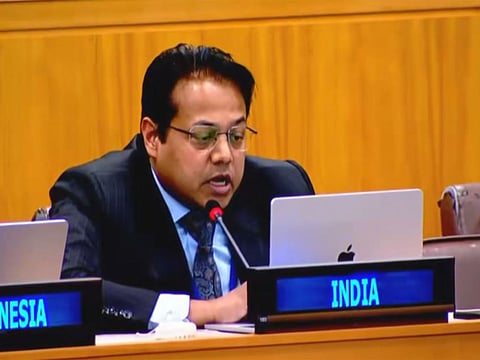
Anuj Swarup, First Secretary at India's Permanent Mission to the United Nations, delivered India's response at the 81st Session of the UN General Assembly’s Third Committee.
The objection concerns a report issued in August 2025, which questioned whether India’s constitutional provisions for Scheduled Tribes provide substantive, rights-based protections or primarily serve administrative purposes.
Rejecting this assessment, India highlighted its existing legal mechanisms for recognising tribal rights, particularly those relating to land and forests. It maintained that the country’s legal and constitutional framework provides safeguards for tribal communities and supports their social and economic development.
In its defence, India cited data on title claims under the Forest Rights Act, 2006, which recognises the rights of eligible forest-dwelling Scheduled Tribes and other traditional forest dwellers over forest land and resources.
The legislation provides a framework for recognising individual and community forest rights, including rights over land under occupation and access to forest resources. India cited the Act's implementation to counter the suggestion that tribal protections are merely administrative rather than grounded in legal rights.
India also underscored its constitutional safeguards and welfare programmes aimed at improving the living conditions of Scheduled Tribes and other disadvantaged communities.
The government’s approach, framed around the principle of “Sabka Saath, Sabka Vikas”, emphasises inclusive development and equal opportunities. India presented these measures as evidence of its commitment to protecting tribal interests while promoting their social and economic advancement.
The response also reiterated India’s longstanding position on the use of the term “Indigenous Peoples” in the country’s context.
While reaffirming its support for the 2007 United Nations Declaration on the Rights of Indigenous Peoples (UNDRIP), India maintained that its entire population was indigenous at the time of the country’s independence. This position reflects India’s approach to the international debate over identifying Indigenous Peoples within its national context.
The exchange highlights ongoing differences between India and the UN Special Rapporteur over how international standards and India's domestic legal framework should interpret the rights and status of tribal communities.
(With inputs from ANI)
