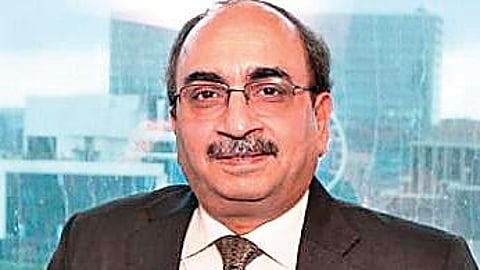

MUMBAI: Regulatory moves discouraging retail investors from making derivative market bets may help the banking system garner much-needed deposits, according to SBI Chairman Dinesh Kumar Khara.
Khara mentioned that budget announcements, such as tweaks to short-term and long-term capital gains, will not significantly enhance deposit accretion. However, he noted, "F&O (futures and options) activities are being discouraged for retail investors by the regulator. Those resorting to such instruments might come back to the banking system."
Policymakers have expressed concerns over the 90 percent loss rate among investors in derivative trades, fearing household savings are being risked in speculation rather than productive uses. According to the capital markets regulator SEBI, retail investors lost Rs 52,000 crore in FY24 due to such activities, prompting a crackdown.
SEBI has introduced a seven-point plan to reduce such trades, and certain measures in the Union Budget are also aimed at curbing this activity. Over the past three years, deposit growth has struggled to keep pace with credit expansion, partly due to money flowing into alternative avenues like capital markets, Khara explained.
He emphasized that bank accounts remain the primary avenue for parking savings and continue to attract interest. He recalled a similar phase of deposit growth trailing credit growth in 2011.
Currently, concerns are being raised about the gap between deposit and credit growth, leading banks to slow down on granting loans, which could harm overall economic growth. Despite this, SBI, the country's largest lender with over a fifth of the market share, is targeting a 15 percent credit growth and an 8 percent deposit growth in FY25, Khara said.
Khara clarified that the bank aims to achieve a 10 percent deposit growth and that the credit growth target can still be met even with a slower deposit growth rate of 8 percent, thanks to its liquidity position. The bank has chosen to deploy excess deposits into its investment book in the past and is now unwinding these investments to meet credit demand.
He added that the bank's liquidity coverage ratio stands at 128 percent and it has decided to maintain it above 110 percent.