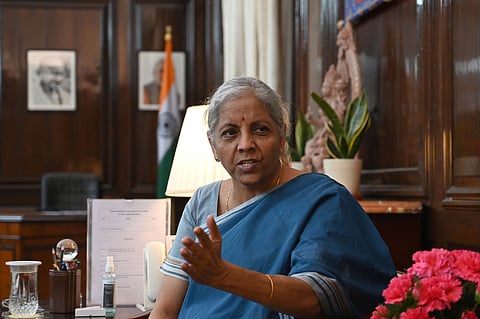

With the first Union Budget after the Lok Sabha elections all set to be unveiled, there are great expectations regarding major policy and tax reforms.
The reforms are expected in the following areas:
Manufacturing
Keeping up with the momentum already built by the ‘Make in India’ initiative, the government should continue boosting the manufacturing sector. Production-Linked Incentive (‘PLI’) schemes with ease of compliance and wider coverage may be considered. A dedicated PLI scheme for SMEs would be a cherry on the cake!
The concessional tax regime for new manufacturing companies has ended on 31st March, 2024. This time limit should be extended for at least two more years. Moreover, this benefit should be extended to limited liability partnerships engaged in manufacturing activities.
In the manufacturing space, automobiles and auto components are among India's biggest strengths, and the auto sector, particularly the EV sector, is looking forward to some announcements. These expectations include:
A new subsidy scheme similar to FAME II with a more comprehensive coverage;
Streamlining policies towards R&D efforts in battery technology and grid integration for development of a widespread and reliable charging infrastructure;
Focus on localisation of manufacturing of semiconductor chips; and direct tax incentives to boost the EV sector.
Renewable energy sector
The government is all set to implement mega projects for achieving the target of COP26 of 500 GW of non-fossil fuel-based energy by 2030. India could progress towards this ambition in record time by incentivising companies investing in renewable energy, electric vehicles and other renewable technologies through additional deductions and exemptions for this sector.
Electronics industry
The electronics industry also seeks duty rationalization and incentives to compete with China and Vietnam, which currently have much lower duty rates and simplified input duty structure. Reducing the duties on components of mobile phone parts or sub-assemblies will help in attracting global value chains to India, which will in turn ensure competitiveness.
Pharma sector
The pharma sector is looking forward to reduction in BCD on imported raw materials for making antibiotics from 7.5% to 5% and enhanced tax incentive for companies to invest in research.
Tax benefits for individual taxpayers
Considering the rising inflation year on year, the existing threshold for deductions and tax slab limits should be increased leading to rise in the disposable income of individual taxpayers and ultimately higher consumption levels. Moreover, the new tax regime should be rationalised further allowing at least Chapter VI-A deductions. Also, the capital gain taxation regime should be simplified and the overall tax rates should be reduced considering the rising volume of such transactions amongst the masses.
Measures for ease of doing business
Faceless assessment and appeals: Faceless income-tax assessments should be rationalised. Currently, large taxpayers are facing practical difficulties in cases where complex facts are involved / voluminous data needs to be submitted. It is recommended that the FM revisits the entire scheme of faceless assessment. The taxpayers above a certain income threshold should have an option to choose between faceless assessment or assessments in the traditional manner. Moreover, steps should be taken for speeding up the disposal of long pending faceless income-tax appeals.
GST tribunals: The process for setting up of nationwide GST tribunals should also be accelerated.
Rationalization of GST rates: Presently, there are four tax rate slabs provided under GST regime i.e., 5%, 12%, 18% and 28%. Multiple tax rate slabs defeat the purpose of introduction of GST. It is recommended to reduce the tax rates to three or two which would also simplify the compliances and reduce the tax burden of the masses.
Revisiting and reframing the newly inserted clause (h) in section 43B of the Income-tax Act, 1961: As a reaction to the working capital problem posed by the aforesaid new clause, quite a few large and medium enterprises (buyers) have started cancelling orders with registered SMEs and placing orders with unregistered SMEs, or forcing SMEs to forsake their registrations, exercising their financial influence. Thus, in the very first year of operation, the said clause has to an extent impacted the ease of doing business equally for SMEs as well as their buyers. The clause therefore needs to be revisited and reframed urgently.
Though India is steering towards becoming the world’s third largest economy, it is an uphill journey and the government’s support would be needed at each step.
(Rakesh Nangia is Non-Executive-Chairman and Yogesh Kale is Director of Nangia Andersen LLP)
