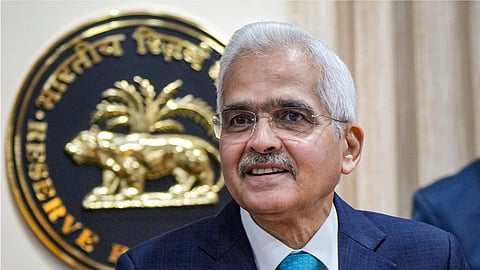

MUMBAI: The Reserve Bank Governor Shaktikanta Das has called for reforming the international financial architecture to ensure equitable voice and representation for emerging economies and also overhauling the debt resolution architecture for vulnerable countries.
The governor also said pushing inflation out of the Consumer Price Index (CPI) basket will make inflation targeting meaningless. A section of economists believe it will make inflation targeting more effective.
Food items constitute as much as 46.9% of the CPI basket. While CPI rose to 5.65% in September from 3.56% from August, food prices as a whole rose 9.24% in the months, with vegetable costs alone surging 36%.
Rejecting the call from the chief economic adviser to the government to strip volatile food prices from inflation targets, saying such a move would make no sense to normal consumers, Das said eliminating food, which accounts for nearly half the consumer inflation basket, would amount to “not having a target at all.”
Das told the annual meeting of the World Bank and IMF in Washington on Friday, where leading finance ministers and central bank governors meet, under the aegis of the Macro Week 2024 organised by the Peterson Institute for International Economics.
“The first and foremost priority should be accorded to reforming the international financial architecture by prioritising inclusive global governance frameworks that better reflect the realities of today’s global economy,” Das said.
The governor also said there is a pressing need to improve global financial regulation to manage systemic risks posed by private capital and non-bank financial intermediaries.
“The current system, while foundational, needs to reform itself to ensure equitable voice and representation for the emerging economies. Enhanced access to resources and a stronger role in the governance of multilateral institutions such as the International Monetary Fund (IMF) and the World Bank will not only enhance their legitimacy but also foster more serious global cooperation in addressing macro-financial challenges,” Das said.
