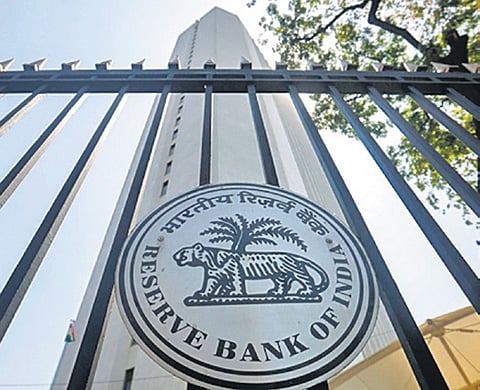

MUMBAI: The monetary policy committee led by Reserve Bank governor Sanjay Malhotra has chosen not to offer any more surprises after three such upsides of 100 bps reduction in the key lending gauge repo, including an unconventional 50 bps delivered in June, citing primarily “the very very uncertain times” in the wake of the fast-evolving trade war scenarios along with the yet-to-be-fully realised monetary policy transmission impact.
Accordingly, the six-member rate setting panel unanimously voted to stay put on the rates at 5.50% and also on the neutral policy stance. Despite a massive reduction in the inflation forecast to 3.1% for the current fiscal, down from 3.8% earlier, the MPC at the 56th meeting that ended here Wednesday, chose to retain the growth outlook at 6.5% again citing “the very, very uncertainties around the tariff war outcomes.
“The status quo decision is in consonance with the objective of achieving the medium-term target for consumer price index inflation of 4% within a band of +/- 2%, while supporting growth, the governor said announcing the policy decisions. Despite the rising risks to global growth, the governor said, “domestic growth remains resilient and is broadly evolving along the lines of our assessment. Private consumption, aided by rural demand, and fixed investment, supported by buoyant government capex, continue to boost economic activity.
On the supply side, a steady Southwest monsoons is supporting kharif sowing, replenishing reservoir levels and boosting agriculture activity. Moreover, services sector and construction activity remain robust. However, growth in industrial sector remained subdued and uneven across segments, pulled down by electricity and mining” and decided to retain growth forecast for the current fiscal at 6.5%.
Addressing the media later, Malhotra said in response to a query on the likely impact of the tariff wars, “we have not assessed the trade war impact on growth as yet, given how very, very difficult and uncertain the situation as of now. Also, we have already lowered our forecast by 20 bps earlier to 6.5% which factors in the trade war impact along with crude oil prices.”
His deputy, the junior most deputy governor in-charge of monetary policy department Poonam Gupta chipped in saying, “our assessment about the first level impact of the trade war on inflation is negative. It’s unlikely the punitive tariffs announced by the US on our exports will have a negative impact on inflation here. However, this may change if there is a considerable level in increase in crude prices.
”Growth Retained at 6.5%Retaining the growth forecast unchanged at 6.5%, based on “the supportive monetary, regulatory and fiscal policies including robust government capex should also boost demand along with positive trends in the services sector.
“However, the prospects of external demand remain uncertain amidst ongoing tariff announcements and trade negotiations. The headwinds emanating from prolonged geopolitical tensions, persisting global uncertainties, and volatility in global financial markets pose risks to the growth outlook.“
Taking all these factors into account, real GDP growth for FY26 is retained at 6.5%, with Q1 at 6.5%, Q2 at 6.7%, Q3 at 6.6%, and Q4 at 6.3%. Real GDP growth for Q1FY27 is projected at 6.6% with risks evenly balanced,” the governor said, adding we “the 20 bps reduction in the April forecast from 6.7% takes into account the impact of trade war related issues on growth.”
Impact of tariff wars
The governor said the MPC could not quantify the impact of the ongoing trade war with the US as yet “given the very very fluid condition now. Its becoming increasingly difficult to predict outcomes now.“ But if the trade war really impacts us, we will not be found wanting to ensure that we’ve price stability and growth continuity,” the governor said. Similarly, Malhotra also said the current assessment does not factor in the likely impact of the penalties on Russian crude as there is no clarity on the quantum of the penalty yet.
But having said, so let me admit, fuel prices play a very important element in our inflation management. But at the same time, we are also confident that the government has more than enough fiscal tools such as excise duty cuts or something like that to keep prices under check.
Inflation vrooming south, to print in at 3.1% this fiscal
With CPI inflation declining for the eighth consecutive month in June to a 77-month low of 2.1%, driven primarily by a sharp decline in food inflation led by improved agricultural activity and various supply side measures, the RBI said food inflation recorded its first negative print since February 2019 at -0.2% in June.
High-frequency price indicators signal a continuation of the lower price momentum in food prices this year to July as well. Core inflation, which remained within a narrow range of 4.1-4.2% in February-May, rose to 4.4% in June, driven partly by a continued increase in gold prices.“Accordingly the inflation outlook for FY26 has become more benign than expected in June. Large favourable base effects combined with steady progress of the Southwest monsoons, healthy kharif sowing, adequate reservoir levels and comfortable buffer stocks of foodgrain have contributed to this moderation.
CPI inflation, however, is likely to edge up above 4% by Q4FY26 as unfavourable base effects, and demand side factors from policy actions come into play.“Considering all these factors, CPI for FY26 is now projected at 3.1% with Q2 at 2.1%; Q3 at 3.1%; and Q4 at 4.4% and at 4.9% in Q1FY27. The risks are evenly balanced,” Malhotra said.
On Trump’s ‘Dead Economy’ Comment
While parrying a direct answer to query from a reporter on the US president Donald Trumps comment that “Indian economy is dead,” the governor said, everyone knows we are the fastest growing large economy, clipping at 6.5%. this is against the World Bank’s global growth forecast of 3%.
We are in fact, contributing as much as 18% of the global growth at the current growth rate, while the contribution of the US is only around 11%.”On Still Incomplete Monetary Policy TransmissionDespite delivering 100 bps cumulative repo rate reductions in three successive actions since February, the monetary policy transmission is still not complete, Malhotra admitted but was quick to add that when it comes to new loans, the rate transmission has been to the tune of 71 bps of which 55 bps contributed by change in the product mix. On the liabilities side, he said there is better transmission at 87 bps.“
The comfortable liquidity in the system has reinforced transmission of the policy repo rate cuts to the money, bonds and credit markets during the current easing cycle. In the credit market, the weighted average lending rate of banks declined by 71 bps for fresh loans (of which 55 bps is due to interest rate reduction) and 39 basis points for outstanding loans from February 2025 to June 2025.
“On the deposit side, the weighted average domestic term deposit rate on fresh deposits moderated by 87 bps during the same period. Moreover, the transmission to lending rates has been broad based across sectors,” the governor said.
"Going ahead, the Reserve Bank will continue to be nimble and flexible in its liquidity management. We will endeavour to maintain sufficient liquidity in the banking system so that the productive requirements of the economy are met and transmission to money markets and credit markets remains smooth,” he said.
