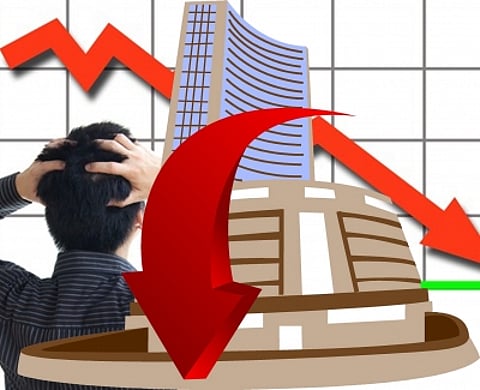

CHENNAI: The Indian stock market faced a sharp downturn on Thursday as renewed trade tensions and fresh US tariffs sparked a wave of selling. The Sensex slumped 700 points to close at 77,850, while the Nifty shed 215 points to settle at 23,450. The decline translated into a market capitalisation erosion of about Rs 4 lakh crore for BSE-listed firms in a single session, underscoring the severity of investor concerns.
The fresh round of US tariffs reignited fears of an escalating trade war, pushing global markets into risk-off mode. Asian and European equities also came under pressure, and Indian markets mirrored the global trend. Foreign portfolio investors (FPIs), already in a withdrawal phase, stepped up their selling, adding to liquidity concerns.
Sectoral impact: IT, metals, autos under pressure
The sell-off was broad-based, with high-beta sectors leading the decline. The Nifty IT index slipped over 2.5%, dragged down by worries of slower tech spending in the US. Metals fell nearly 3%, as tariff fears stoked demand uncertainty in global commodities. Autos were down 1.8%, hurt by weak earnings and sluggish retail demand.
Banking stocks also faced pressure, with the Nifty Bank index sliding 1.5%, led by private lenders. PSU banks managed to hold up relatively better, cushioned by expectations of government support. Defensives such as FMCG and pharma showed mild gains of around 0.5% but were insufficient to offset the broader weakness.
Investor confidence has been fragile in recent weeks due to persistent capital outflows and a lack of strong domestic growth signals. The sharp erosion of wealth on Thursday has further dented sentiment, with traders adopting a cautious stance ahead of upcoming economic data releases and central bank commentary.
What lies ahead
The steep fall underscores the sensitivity of Indian equities to global trade and policy shocks. Analysts note that unless clarity emerges on the US tariff stance, foreign flows are unlikely to stabilise, keeping volatility high. The rupee’s movement against the dollar and crude oil price trends will also be closely watched as additional risk factors.
On the domestic front, any supportive policy measures from the government—such as incentives for manufacturing or relief for stressed sectors—could provide a near-term buffer. However, sustained recovery will hinge on corporate earnings regaining momentum and global trade tensions easing.
Market strategists advise investors to remain selective, focusing on fundamentally strong companies with resilient balance sheets. While short-term turbulence is likely, long-term prospects for India’s equity market remain tied to structural growth drivers such as consumption, infrastructure investment, and digitalisation.
