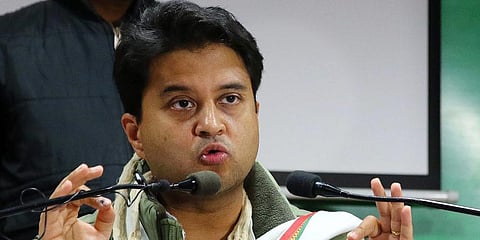

CHENNAI: India is on track to surpass Germany and emerge as the world’s third-largest economy by 2027, communications minister Jyotiraditya Scindia said, expressing confidence that the country’s growth momentum and reform-driven trajectory will continue over the coming years. The projection reflects India’s rapid economic expansion over the past decade and underscores the government’s view that structural changes undertaken in recent years are beginning to yield sustained results.
Scindia noted that India has already moved from the margins of the global economic order to its centre in a relatively short period. From being the tenth-largest economy just over a decade ago, the country has climbed steadily in the global rankings, aided by consistent growth, rising domestic demand and a greater integration with global markets, PTI reported on Saturday.
According to him, this transformation has been powered by policy stability, institutional reforms and an emphasis on building long-term economic capacity rather than short-term gains.
The minister highlighted that India’s gross domestic product has expanded significantly in nominal terms in recent years, placing it firmly among the world’s largest economies. While the United States and China remain far ahead, the gap with economies such as Germany has narrowed as India continues to grow at a pace well above that of most advanced nations. Germany’s economy, though highly sophisticated and export-driven, has been facing slower growth due to ageing demographics, energy constraints and a challenging global trade environment, factors that have opened space for faster-growing economies like India to close the gap.
India’s growth story, Scindia argued, is underpinned by strong domestic fundamentals. A large and young population has supported consumption and provided a growing workforce, while increased public investment in infrastructure has helped crowd in private capital. Sectors such as services, manufacturing, digital technology and logistics have expanded rapidly, improving productivity and strengthening India’s role in global supply chains. The push to improve ease of doing business and reduce regulatory friction has also helped attract both domestic and foreign investment.
He also pointed to the increasing role of states in driving economic expansion, with competition among them to attract investments and build industrial ecosystems. This decentralised growth model, supported by central policy frameworks, has broadened the base of economic activity beyond a few metropolitan centres and reduced regional imbalances. According to the minister, such diversification is critical for sustaining high growth over a long period.
From an analytical perspective, the projection that India could overtake Germany by 2027 aligns with prevailing global trends. India has been among the fastest-growing major economies, even as growth in many advanced economies has slowed. However, political narratives often gloss over the structural and external challenges that could hinder such ambitions, a Chennai-based economist said on condition of anonymity.
If India maintains its current growth trajectory and avoids major external shocks, the arithmetic of GDP expansion suggests that a shift in rankings is plausible within the stated timeframe. However, this outcome will depend on the country’s ability to manage inflation, maintain fiscal discipline and continue reforms that enhance productivity and job creation, the economist said.
The broader implications of becoming the world’s third-largest economy would extend beyond rankings. A higher economic standing would strengthen India’s voice in global economic and strategic forums and enhance its ability to shape international rules and standards. It could also increase investor confidence, leading to higher capital inflows and deeper integration into global value chains. At the same time, the challenge for policymakers will be to ensure that the gains from growth translate into higher incomes, better employment opportunities and improved living standards across the population.
Scindia’s remarks therefore reflect both optimism and ambition. While the prospect of overtaking Germany is a powerful symbol of India’s rise, the larger task lies in sustaining growth in a volatile global environment and converting economic scale into inclusive and durable prosperity.
