
MUMBAI: Domestic steel demand is set to outpace other major economies in 2025 with a growth of 8-9 percent, driven by a shift towards steel-intensive construction in the housing and infrastructure sectors along with better demand from engineering, packaging and other segments. The safeguard duty being sought by the industry, if granted, will be a key monitorable for prices and profitability, says a report.
In 2024, global steel demand is estimated to have declined 1 percent, Crisil Ratings said Thursday, adding that demand in China, the largest steel producer and consumer, declined 3.5 percent, led by declining steel demand from the real estate sector, despite conducive policy changes and release of support packages.
Steel demand from Europe, Japan and the US is also estimated to have fallen by 2-3 percent. However, demand growth in developing economies such as India and Brazil kept global demand from declining steeply. Demand is estimated to have increased by 11 percent in India, 5.6 percent in Brazil and 2.7 percent in other steel consuming economies in the coming years.
In 2025, global steel demand is expected to inch up by 0.5-1.5 percent on the back of easing financing conditions and pent-up demand from some key steel consuming economies, which will support manufacturing. An anticipated recovery in residential construction in economies such as the EU, the US and Korea in line with easing of financing conditions will support growth, too. India will continue to lead the pack in terms of demand.
Domestic supply, however, remains a point of concern, according to Sehul Bhatt, a director with the agency, adding that in 2024, it was a benign 5.2 percent, with extended periods of planned and maintenance shutdowns.
Aggregate crude production by the top seven players increased only 0.05 percent in the year, and so did their finished steel production. However, crude and finished steel production from medium and small players increased 14 percent and 11.3 percent, highlighting the consistent demand growth from long steel end-users.
Competitive imports and decline in exports also played a role in weaker production growth in 2024, he added. While finished steel imports increased 24.5 percent, exports declined 6.4 percent, leading to additional availability of 3.2 million tonnes of finished steel apart from domestic production. This additional material availability accounted for 2 percent of the total finished steel demand.
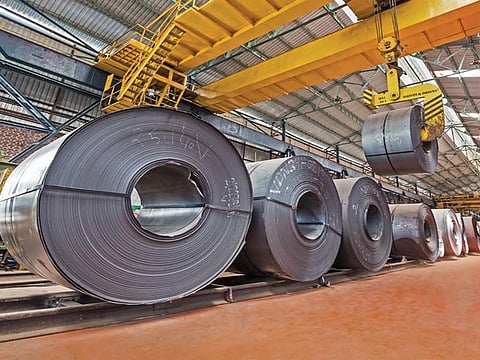
Finished steel imports from all key exporters to India increased significantly in the past few years. For instance, China has traditionally been an exporter of value-added products and specialty steel such as galvanised and coated steel, alloy steel and stainless steel to India, with minimal share of hot-rolled coils (HRC) and strips, and cold-rolled coils (CRC) and strips. However, between 2022 and 2024, while finished steel imports from China increased 2.4-fold, import of HRC jumped 28-fold. Notably, HRC is used as feed material to produce various value-added downstream products, and these imports are often at a discount to domestic HRC prices, creating price pressure on domestic steel.
Similarly, overall finished steel imports from Japan increased 2.8-fold in 2024 from 2022, while HRC imports increased 16.6-fold. Finished steel imports from Vietnam increased 8-fold, while HRC imports jumped 27-fold. Import growth from Korea was relatively modest, bringing down its share in India’s finished steel import basket.
Domestic steel prices, meanwhile, declined in 2024, impacted by additional material availability due to increase in net imports. HRC prices declined 9 percent and CRC prices declined 7 percent, thereby slowing topline growth of domestic mills. But falling coking coal prices, along with low volatility, have helped reduce margin pressure somewhat.
Coking coal spot price for the premium low volatility grade, Australia-origin, declined 12 percent in 2024, whereas iron ore prices have increased 9-10 percent during the period.
Imposition of a safeguard duty proposed by the industry could be a positive and if implemented by February, steel prices in 2025 would be much higher than 2024, with the impact more prominent in the first half.
According to Vishal Singh, a director with the agency, domestic prices are under pressure due to global steel price decline and are expected to remain soft in 2025. Prices have a 4-6 percent upside potential hinged on implementation of the safeguard duty. As mills ramp up production from new plants, increased supply will reduce flat steel prices but will still be higher than the average price of 2024.
