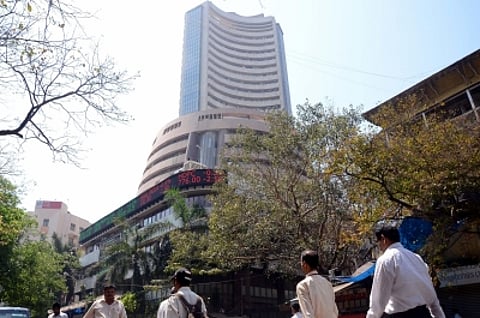

CHENNAI: Indian benchmark indices opened on a cautious note with a slight negative bias on Thursday, July 10, amid muted global cues, investor caution ahead of the US-India trade talks, and anticipation surrounding the Q1-FY26 earnings season.
At 11:16 AM, BSE Sensex was down 239 points or 0.29% at 83,296.10, while Nifty 50 slipped 89 points to 25,386.75.
Key drivers for the fall of indices include a mixed Asian markets trend and the uncertainties regarding US Federal Reserve policy and global trade.
Japan traded lower, while China, Korea, and Hong Kong showed modest gains.
Global investor sentiment was cautious amid concerns over US Federal Reserve policy and trade uncertainties. Market participants are awaiting clarity on the US-India trade pact after the expiry of the 90-day US tariff suspension on July 9.
No official agreement has been announced yet, contributing to market uncertainty.
Today, TCS will announce its Q1 FY26 results, marking the start of the earnings season.
Analysts expect a 0.5% quarter-on-quarter decline in revenue and flat margins, attributed to lower utilisation and higher talent costs.
The IT sector opened marginally lower.
Foreign portfolio investors (FPIs) continue to rotate between sectors, while inflows observed in auto and IT sectors and outflows seen in power and capital goods. Total FPI outflows for July so far stand around ₹5,700 crore.
Meanwhile, India VIX fell 2.09% to 11.94, reflecting some easing in volatility.
The derivatives data suggests resistance for Nifty near the 25,500 level.
Key support levels are expected near 25,200, with further downside seen around 24,800–24,400 if pressure persists.
Outlook:
TCS earnings report later today will likely set the tone for the IT sector and broader market sentiment.
US-India trade developments remain a key macro trigger.
US Fed meeting minutes (expected today) could impact global risk appetite and foreign investor flows.
Summary:
and sectoral FPI shifts. The near-term direction will depend on key corporate earnings, geopolitical developments, and macroeconomic signals from the U.S.
