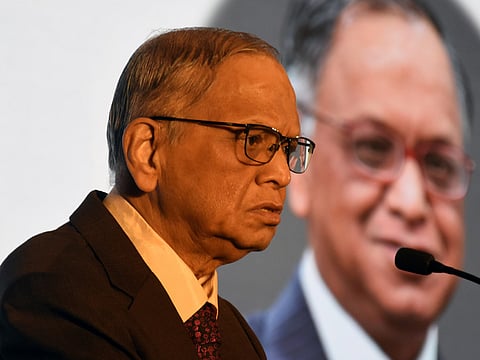

CHENNAI: N R Narayana Murthy has once again ignited a national conversation by advocating a 72-hour work week for India’s youth, drawing inspiration from China’s “9-9-6” culture of 9 a.m. to 9 p.m., six days a week. Speaking recently, the Infosys co-founder said that India must embrace extraordinary discipline and hard work if it wants to close the economic gap with global competitors. He pointed to China as an example of a country where long hours, intense commitment and productivity have gone hand-in-hand in driving rapid economic growth.
Murthy recalled that senior professionals in his network visited Chinese cities—beyond the glossy metropolitan centres—to understand the country’s fierce work ethic. According to him, nations rise only when their citizens combine smart work with sustained effort, and those who have benefited from opportunity must “give back” through greater dedication.
His remarks, however, triggered a swift and polarised reaction across social media and corporate circles. Many professionals pointed out that they are already working long hours due to heavy workloads, long commutes and a work culture that blurs the line between office and home. Critics argued that simply increasing weekly hours does not address chronic issues such as low productivity, infrastructural stress, low pay in several sectors, and widespread burnout.
HR practitioners and legal experts have also pushed back, noting that a 72-hour work week would conflict with labour regulations and risk institutionalising overwork in industries that already lack strong worker protections. They argue that such suggestions could encourage unhealthy norms in companies that equate long hours with loyalty rather than output.
Gender and social analysts quoted in reports highlighted another critical dimension: long workdays disproportionately affect women, who carry the bulk of unpaid household responsibilities. They caution that glorifying extreme work hours without addressing this imbalance could reduce women’s workforce participation and deepen gender inequalities in corporate India.
Health professionals, too, weighed in, warning that sustained overwork is linked to elevated stress, exhaustion and long-term health risks. They argue that cultures built on relentless “hustle” often achieve short bursts of productivity at the cost of creativity, decision-making and employee longevity.
Economists and some business leaders, however, offered a more sympathetic view of Murthy’s position. They note that his argument reflects a broader concern about India’s competitive preparedness and demographic opportunity. With a large young workforce, they say, building a culture of excellence and strong work ethic is essential for lifting per-capita productivity. But even supporters acknowledge that higher hours cannot substitute for systemic improvements in efficiency, training, digital infrastructure and workplace design.
Interestingly, the debate has unfolded at a moment when Infosys—Murthy’s own company—has taken a noticeably different stance. The organisation has begun alerting employees who log more than around nine hours a day during remote work, reminding them to maintain work-life balance. This signals the broader corporate shift underway: companies are increasingly wary of burnout, attrition and the reputational risks associated with unhealthy work cultures.
Taken together, the reactions underline the widening gap between older views of work rooted in sacrifice and discipline, and the contemporary push for sustainable productivity, mental well-being and inclusive workplaces. Murthy’s remarks have reignited a crucial national discussion, but the response shows that India is deeply divided on what “hard work” should look like in today’s economy.
For now, the debate remains unfinished. Murthy’s call has revived questions that lie at the heart of India’s growth story: How much should individuals give? What should companies demand? And can India pursue global competitiveness without compromising the health, fairness and aspirations of its workforce?
