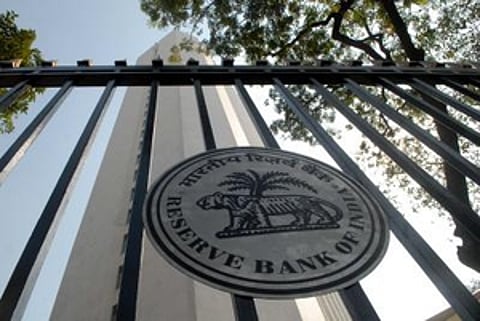

MUMBAI: Though the RBI-led rate-setting panel has decided to get into a rate-knot this time—leaving both the benchmark interest rates as well as the neutral monetary stance unchanged, governor Sanjay Malhotra has given enough hints at another round of easing, saying for now it’s better to be waiting and watching than acting given the absolute fluidity of external situation led by the US tariffs.
After three successive reductions to the tune of 100 bps to 5.5%, the monetary policy committee or MPC on Wednesday unanimously voted to take more time to assess the impact of the 50% tariffs on the economy as well as other fast evolving issues both domestic and external, with the domestic issues being the positive rub-offs from the GST rate reduction and the steeply fallen inflation along with the floods impacting farm production and the resultant impact on food inflation. Though the panel retained the neutral stance too, it was with dissent with two external members—Ram Singh and Nagesh Kumar--wanting to change it accommodative, the governor told reporters later.
Given these the governor has admitted that there is room for more action on the rates front, may be in December, by which time he expects more clarity on whether tariff uncertainties can be dismissed. Moreover, festive demand trends will provide a clearer view of growth potential amid external demand volatilities.
On how far the GST rate cuts can cushion the impact of the 50% tariffs on the broader economy, Malhotra said, not all of it, but may be 20 bps cushioning from the likely increased domestic demand, which he did confirm that domestic demand remains weak and the growth outlook is clouded due to elevated global policy uncertainties, and tariffs will moderate already weak exports.
“While GST rate cuts will have a sobering impact on consumption and growth, tariff related developments may slow down economic expansion in the second half,” the governor said, adding “we are keeping a close watch and stands ready to take steps as warranted.”
On growth, the MPC said though FY26 estimates have been revised upwards to 6.8% from 6.5% earlier, despite admitting to have some slowdown in Q3 and Q4. As Malhotra noted, Q1 saw an unexpected growth upside at 7.8% due to a low deflator, frontloaded exports to the US, and higher government spending. Further, high-frequency indicators suggest that domestic economic activity sustained momentum even in Q2. However, Q3 and Q4 must tough it out on their own, with the official projection being 6.4% and 6.2%, respectively, while Q1 of FY27 is pegged at 6.4%.
On the inflation front, the governor said prices overall prices are expected to remain benign, and an above-normal monsoons is expected to keep food prices in check. Forecasts for FY26 have been revised downwards to 2.6%, while Q3 and Q4 are pegged at 1.8% and 4%, respectively, and at 4.5% for next fiscal.
The retail inflation has been printing below 4% since February and has eased to a six-year low of 2.07% in August up from 1.8% in the previous month.
But many analysts say the actual numbers will undershoot RBI forecasts and they say average FY26 inflation to settle at 2.4%, factoring in the impact of GST rate cuts. If so, real interest rates will stand at 1.6%, which is within the neutral range of 1.6–1.9%.
But the governor came with a loaded cannon of strategic measures aimed at lifting exporters and domestic financing. It has announced a slew of steps to internationalise the bleeding rupee, by allowing neighbouring countries to take rupee credit. Offering flexibility to exporters, Malhotra has increased the timeline for the realization of export proceeds in rupees from one month to three months, supporting rupee invoicing.
The RBI also announced a series of forward-looking measures, expanding bank financing to include M&As, increasing limits on capital market exposures, and rationalizing the large exposure framework for efficient capital allocation. Lastly, the reduction of risk weights for infrastructure lending by NBFCs is expected to reduce the cost of capital for critical sectors.
The other key changes, counting up to 22, include the new provisioning norms for the expected credit loss (ECL) framework, by replacing the extant framework based on incurred loss with an expected credit loss approach, subject to a prudential floor, while retaining the existing asset classification norms.
Another is the Basel III guidelines on capital charge for credit risks–standardised approach, as part of improving the resilience of the banking sector and aligning the regulatory framework with the best international practices.
Easing the forms of business and prudential regulation for investments, introduction of risk-based premium framework for deposit insurance, reviewing of capital market exposures guidelines for banks, allowing banks to finance acquisitions between domestic corporates; enhancing the limit for lending by banks against shares, units of Reits, units of Invits while removing the regulatory ceiling altogether on lending against listed debt securities; and put in place a more principle-based framework for lending to capital market intermediaries.
Another include withdrawal of the guidelines on enhancing credit supply for large borrowers through market mechanism, lowering the risk weights on infrastructure lending by NBFCs; licensing framework for new urban cooperative banks and a hsot of easing on the payments and settlements side including relaxation in compliance requirements for small value exporters/importers, review of ECB framework.
For consumer protection, the RBI has decided to review the instructions on basic savings bank deposit) accounts, measures to strengthen the internal ombudsman mechanism in lenders.
