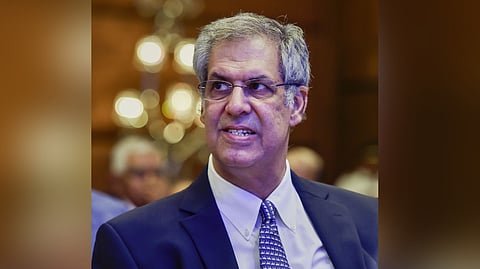

The rift is widening among the seven active trustees of the Tata Trusts just before the scheduled October 10 board meetings. These trusts control the Tata Group, the country's largest corporate house with over $170 billion in annual sales, owning 66.4% of the conglomerate.
Some trustees are now openly questioning the authority of Noel Tata, the chairman. This comes as the conglomerate's non-banking arm, Tata Capital, launches the largest segmental IPO of Rs 15,512 crore on Monday.
Noel Tata is at the center of the debate due to three key issues: a missed listing deadline for upper layer NBFCs (set for September 2025), a recent nomination tussle among trustees, and the Shapoorji Pallonji Group’s effort to monetize its 18.6% group holding.
Noel's ability to unite the trustees, establish his authority over the Trusts and the Tata Group (like the late Ratan Tata), and balance family ties, will define his leadership. This outcome is crucial for the future governance of the systemically important conglomerate.
Key players and public vote
The key trustees include Chairman Noel Tata and Vice-Chairman Venu Sreenivasan (72, of TVS Motor, also a Tata Sons nominee). Other trustees are -- Vijay Singh (former Defence Secretary, allegedly linked to the Augusta Westland scam); Mehli Mistry (first cousin of the late Cyrus Mistry and a Ratan Tata confidante); Lawyer Darius Khambata (55); Pramit Jhaveri (65, former Citi India CEO, 2010-19); and Jehangir HC Jehangir (known for philanthropy).
The rift became public on August 14. Noel Tata and Venu Sreenivasan voted to re-nominate Ajay Singh to the Tata Sons board for a third term. However, the other four trustees—Mistry, Khambata, Jhaveri, and Jehangir—voted against the re-nomination. This rejection led to the abrupt resignation of Ajay Singh, the 77-year-old retired civil servant, as a nominee director from the Tata Sons board. The manner of Singh’s exit was a clear break from tradition. Under the late Ratan Tata, all decisions were unanimous, despite all trustees having equal power and the chairman holding no veto. Ratan Tata’s influence ensured consensus. Singh’s forced exit, however, resulted from a non-unanimous 4:2 vote.
Jimmy Naval Tata, Ratan Tata's younger brother, is also a trustee but did not attend the meeting. Sources say the Noel camp believes the four dissenting trustees are not following the established "Tata way," which relies on decades of consensual and unanimous decisions.
Sources claim the four trustees' behavior that day infuriated Noel and Sreenivasan. They described the action as "clandestine," not the "Tata way," and an attempt to usurp the powers of the Trusts and, consequently, Tata Sons. The Trusts changed the rules for appointing nominee directors to the Tata Sons board on October 17, 2024, shortly after Ratan Tata’s death and Noel Tata (69) became Chairman.
The new rules state that nominee directors (who hold significant board power) aged over 75 must be reappointed annually after a performance review. The person being reviewed cannot participate. The Trusts met on September 11 for Singh's review, as he is 77. The Trusts can appoint one-third of the Tata Sons board. With Singh's resignation, the board has six members: Chairman N. Chandrasekaran, Noel Tata, Venu Sreenivasan, Harish Manwani, Anita M. George, and Saurabh Agrawal.
Sources suggest the rift intensified when Khambata, Jhaveri, and Jehangir opposed Singh’s reappointment while simultaneously pushing for Mehli Mistry to join the Tata Sons board. Noel and Sreenivasan blocked this move, preventing a resolution. The convention limits the Trusts to appointing one-third of the board.
The Trusts hold enormous power over Tata Sons, including veto powers, as specified in Article 21 of the Tata Sons' Article of Association. The Tata Sons board currently has six members due to three recent vacancies: the retirement of Ralph Speth (ex-JLR chief), the expired term of industrialist Ajay Piramal, and the retirement of ex-UTI chief Leo Puri.
