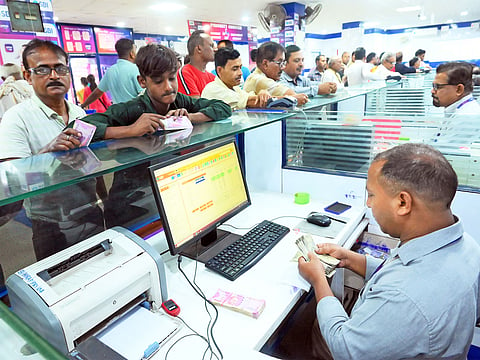

MUMBAI: Domestic banks are well-positioned to navigate global uncertainty, tariffs, rate cuts, and a weakening rupee and are primed for better and faster growth, a global rating agency has said.
“Financial resilience among domestic corporates is improving. We applied Asia-Pacific corporate default rates to our credit model scores to more than 2,000 Indian companies. Our scenario analysis suggests that Indian banks can easily absorb potential slippages, making them primed for growth," said S&P Global Ratings credit analyst Geeta Chugh in a note Wednesday.
Our scenario analysis suggests that new non-performing loan formation in corporate lending will average 1.1% a year over the next two years. However, we project the overall rate of new NPL formation will be higher, at 1.7-1.8%, because of more slippages in the small and midsize enterprise and retail segments, she said.
But she was quick to add that pre-provision operating profit of 3.6-3.7% of loans mean banks can easily absorb the higher credit costs, and their earnings will remain comparable to, or better than, those of many regional peers.
Notwithstanding global uncertainty and cautious lending, we forecast credit growth of 11.5-12.5% over fiscals 2026 and 2027, despite subdued demand and tighter underwriting. We expect credit growth will revive from the second half of this fiscal on the back of cuts in goods and services tax rates, income tax reliefs, and potential regulatory easing.
Key factors that contribute to the resilience of banks include low exposure to tariff-hit sectors, deleveraging by corporates, and a focus on secured retail lending, she said.
“While we expect asset quality to soften, weak loans will remain at 3-3.5% and credit costs will rise to 80-90 bps over the next two years. We anticipate credit costs will rise as the tailwinds from sharp recoveries fade and due to stress in segments like unsecured retail, under- Rs 1 crore SME loans, and microfinance,” she said.
On the impact of the US tariffs, she said banks' exposure to the tariff-hit textiles and gems and jewelry sectors stands at just 2% of total loans, as of August 22, 2025. These sectors are most vulnerable due to high leverage and low margins. The impact on individual companies will depend on factors such as product mix, sales locations, competitive advantages, and their own leverage.
On the rupee weakness, Chug said “banks face limited direct impact from a depreciating rupee, with external borrowings at just 5%. Indirect impact is also minimal because 75% of corporate external commercial borrowings are hedged.”
A sharp credit revival--though we don't expect one in the next two years--would stretch banks' funding profiles and force them to rely on alternative funding sources. Cuts to the cash reserve ratio offer relief. While banks' loan-to-deposit ratios are competitive regionally, the reserve requirements exceed those of many peers," Chugh said, adding “we expect earnings to moderate but remain above long-term averages."
The capacity of banks to finance private investment may be constrained by their ability to tap domestic savings, as investors increasingly shift toward alternatives such as mutual funds, equities, and real estate. With deposits under pressure, banks are likely to rely more on wholesale domestic and international debt for funding.
The report also warns of borrower concentration risks among mid-tier public sector banks, and depositor concentration among private sector banks.
