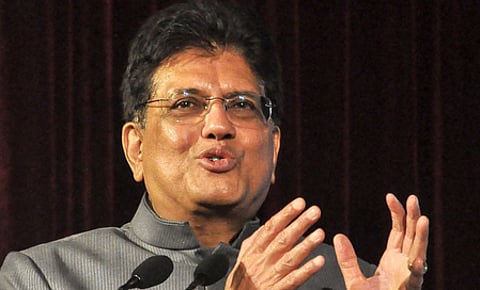

The government has intensified its push across three interlinked fronts — trade policy, sourcing of critical minerals, and import substitution — as it seeks to rewire India’s economic levers in a volatile global landscape, assured Commerce Minister Piyush Goyal on Friday. However, at the same time, Goyal urged Indian industry to adopt import substitution, citing examples of Japan and South Korea.
"In our country, we are looking at increasing explorations and I have been talking to start-ups engaged in this area both for recycling of the waste, from which we can extract rare earths, and we are also in dialogue with start-ups to see if we can create the processing facility in India, which is currently concentrated in one geography, " said the Commerce Minister during his address at an event of ASSOCHAM. He assured that the plan entails negotiating new trade pacts, boosting domestic exploration, recycling, and processing capacity, and backing startup ventures in this domain.
Goyal asserted that India is negotiating Free Trade Agreements with several countries as an initiative to reduce reliance on any single supplier. Meanwhile, he asked the Indian industries to tap other source of imports and diversify the supplier to ensure the industries are safeguarded and asked them to prioritise locally available alternatives to imported intermediate goods, in a bid to support domestic industry.
Rather than striking deals with direct competitor nations, the government now plans FTAs aligned with sectors in which India has strengths or promising potential. “Countries that come to India with products, goods, and services that straight away impact our own businesses, we have stopped all those types of engagements,” Goyal said. He criticised the tendency of Indian firms to opt for imports from countries even for the sake of marginal cost savings, and suggested to follow the practices of companies in Japan and South Korea, which favour local suppliers.
According to him, India’s approach combines selective liberalisation with protective calibration, aiming to make its industry more self-reliant while preserving global linkages. As negotiations with the US, EU, and other economies proceed, how well these shifting priorities balance competitive openness and domestic safeguarding will test the government’s trade doctrine in real time.
