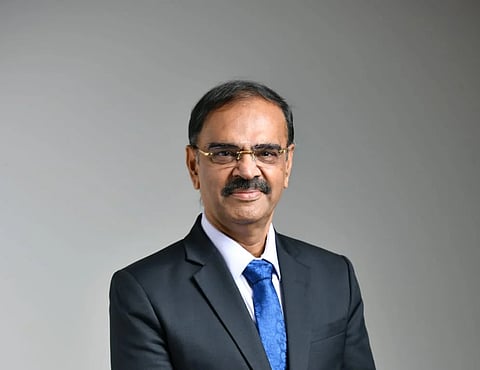

RBL Bank, one of the first banks in India to operate without a promoter entity and be entirely shareholder-owned, made history last week by announcing the largest-ever foreign direct investment (FDI) in the domestic banking sector. The bank clinched a landmark ₹26,853-crore deal with Emirates NBD Bank, under which it will issue 960 million preferential shares at ₹280 per share to the acquirer for a 60% equity stake upon conversion, along with a mandatory open offer for an additional 26% later.
The bank’s Managing Director and CEO, R Subramaniakumar—a career public sector banker who has previously worked with PNB, Indian Bank, and IOB, and served as the RBI-appointed administrator of Dewan Housing Finance after its collapse—spoke with Benn Kochuveedan about the deal and the bank’s performance. Excerpts:
Congratulations on securing the biggest deal in India’s banking sector. When do you see the transaction being completed, and how confident are you about obtaining RBI approval, especially since it recently rejected Japanese lender SMBC’s bid to become a promoter of Yes Bank?
First of all, this is only a proposal. We need to obtain all the necessary approvals, starting with shareholders and then the regulatory authorities—of which the RBI’s nod is key. My rough estimate is that the entire process will take around six to eight months to complete.
Though I can’t and don’t want to comment on other deals, it’s important not to confuse different situations—they’re not comparable. What’s happening at RBL Bank is not a sale; it’s a fresh capital infusion through the issuance of 960 million new shares, without diluting anyone else’s shareholding. I want to make it very clear: this is fresh capital coming into the bank—it’s a big cheque. So overall, the shareholding base of the bank will expand by 960 million shares, and none of the existing shareholders are selling their stakes.
Do you foresee any regulatory hurdles going forward?
I don’t see any negativity surrounding the transaction.
Will you continue to lead the bank after the deal, once ownership changes?
That’s not a question for now. The transaction is still underway. I have been appointed by the Reserve Bank to lead the bank for the next three years.
Have you already approached the RBI, or will that happen after shareholders’ approval?
Obtaining approvals is a long process, and we will go step by step.
The September quarter wasn’t particularly strong, with net income falling 20% and margins under pressure. How do you see the bank performing going ahead, now that capital is no longer a constraint?
I wouldn’t say Q2 was a washout—there were several positives. Corporate advances grew 20%, and overall advances were up 34%. The retail secured portfolio rose 30%, and the unsecured retail portfolio de-grew 9%. Together, corporate and secured retail now account for around 74% of our assets.
Over the past 18 months, we’ve been scaling up our key businesses, and we’re confident of continuing that momentum. Our net profit declined because we had to make about Rs 44 crore in mark-to-market provisions, which offset our income. Otherwise, our earning engines are working well.
Another key point is that all our verticals together turned profitable this quarter—well ahead of our target of achieving that by the end of the year. Thanks to the sustained efforts of the team, we reached profitability earlier than expected.
Has the repricing of liabilities been completed? When do you expect margins to stabilise?
Our internal assessment suggests margins will start improving from the next quarter. While repo-linked transmission is complete, the repricing of term deposits will be done by Q3. Also, our microfinance book, which had been declining, has resumed disbursements. From Q3 onwards, you can expect margin growth. In Q2, we printed a flat NIM of 4.51%, but it will improve from here.
How strong is your asset pipeline?
We no longer push personal loans, but we’re actively growing our business loans, working capital loans and other enterprise products. All of them are performing phenomenally well, as are our vehicle, tractor and mortgage loan portfolios. This quarter, our LAP (loan against property) book reached ₹10,000 crore—a milestone for us.
Are there any new product areas you plan to enter—perhaps gold loans, given the surge in gold prices?
We entered the branch-based gold loan business last year with just 34 branches, and it’s performing very well—clocking around ₹150 crore a month. From next quarter, we expect to reach about ₹200 crore a month.
