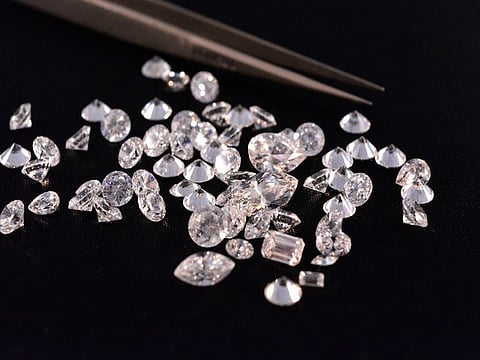

In past few years, synthetic diamonds, also known as lab-grown diamonds (LGDs), have been the new flash in the pan. They have threatened natural diamonds, hit the production and bottom lines of mining giants such as DeBeers and Argyle, and almost completely destroyed India’s old diamond cutting and polishing industry.
Now, things are again changing. In recent months lab-grown diamonds (LGDs) are loosing demand rapidly due to oversupply and with consumers preferring to shift back to the appeal of the natural stones. This was confirmed recently by World Diamond Council President Feriel Zerouki in an interview with Reuters in Luanda.
"If you look at the latest trends, lab-grown diamond prices are crashing. This is impacting consumer confidence in lab-growns," Zerouki said. A collapse in lab-grown diamond prices on the back of increased production in China and India, has started to undermine confidence in the synthetic gems, he added.
Industry analysts told Reuters the synthetic diamond bubble seems to have burst with some claiming that prices of one-carat and two-carat lab-growns had fallen as much as 96% since 2018. This was coroborated by Paul Zimnisky, a diamond trade analyst, who said the lab-growns were currently selling at at a 90% discount to similar natural diamonds -- when in 2015 they were just 10% cheaper compared to natural diamonds.
Experts have been warning the price of LGDs could drop so low that they become fashion accessories that no longer compete with diamonds, especially in the key bridal market.
Impact on India
In India, it is both good and bad news. The bad news first. Surat and many other such roughs polishing and cutting hubs, saw small and medium units diversifying to produce synthetic diamonds as international markets changed gear post 2022.
But the synthetic diamond market has not kept pace. In 2024, exports of polished LGDs shot up 50% in volume to 6.45 million carats, compared with 4.28 million carats in 2022. However, in value terms, earnings dropped 45%. This year, both volume growth and value realization have plummeted.
Anecdotal reports from Surat point to heavy investments being made to set up 6,000 synthetic diamond reactors employing 40% of the original cutting and polishing workforce. Workers unions since June are pointing out that nearly 4 lakh employees in the ‘synthetic’ units in Surat are facing delays in payment of wages or lay-offs.
Blood diamonds
However, those who expect the natural diamonds industry will proportionately benefit from the decline of ‘lab-growns’, may be in for a disappointment. Global synthetic diamond production reached 17.1 billion carats in 2024. While synthetic diamonds will continue in industrial and electronic use, their share in the gems and jewelry - the lifestyle market, once projected at nearly $26 billion is plummeting. On the other hand, natural diamonds are facing social headwinds. A November 2024 study on the diamonds market by Mckinsey & Co pointed to the increasing ethical consideration against mined diamonds often associated with exploitation and child labour. Environment, Social and Governance (ESG) factors have become more important to millennial and GenZ markets, who prefer buying branded jewelry that guarantee ESG compliance.
Natural diamond production worldwide that touched 129 million carats in 2024, is expected to dip to 125 million carats in calendar 2025. The slowing market has seen several major mines, including Australia's Argyle and key sites in Canada, depleted or are nearing the end of their operational lifespans. Sanctions since the Ukraine war against Russia's Alrosa, the world's largest diamond producer by volume, have also severely disrupted the supply chain of roughs, which has impacted India.
Reacting to the slowing market, mining companies have lowered investments in shoring up ageing mines and developing new ones. This means supply will be restricted in the long term as it takes 10 years for a new mine to reach commercial production.
However now, with synthetic diamonds receding miners see a sliver of opportunity. At the recent Luanda conclave, De Beers says it wants to boost production, but pointed out that a rebound in demand calls initiatives such as the Luanda Accord. This is an agreement by diamond-producing countries and companies to create a collective marketing fund. So far, most African producers have committed to allocate 1% of their annual diamond sales revenue to promote natural diamonds.
India is not a miner of roughs. It imports them and then polishes over 90% of the world's diamonds by volume and is the largest exporter of cut and polished diamonds. In 2023-24, India exported approximately $18.2 billion worth of diamonds. Theoretically, we should be the biggest gainers from the international slide in synthetic diamonds.
But there is a fly in the ointment. The Trump administration has imposed an over-50% tariff on most Indian goods. Since 45% of our polished diamonds and jewelry is destined for the US, the tariffs have been back-breaking. One analysis has projected a revenue drop of 28–30% in FY2006.
There is a silver lining though. The natural diamonds cutting and polishing industry is seeing a gradual rebound driven by a steady growth in domestic demand. This has somewhat offset the impact of the international slump. Industry pundits are saying the domestic natural diamond market has grown by up to 20% annually since 2022 and is projected to reach $4 billion by 2030.
The local demand has been stoked by both strong efforts of local diamond units as well creative campaigns promoting natural diamonds by companies like De Beers. Meanwhile, trade negotiations have now reopened between India and the US. With all the pointers in the direction of India tapering off Russian crude imports, there is the possibility of some of the US tariffs being rolled back too.
