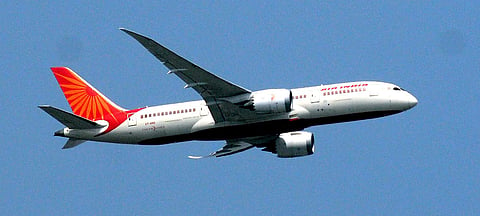

Air India has incurred losses of Rs 4,000 crore over the past few months due to restrictions on flying over Pakistan, the airline’s CEO Campbell Wilson said on Wednesday. The closure of Pakistani airspace, following the Pahalgam terror attack in April, has forced international flights from India to North America and Europe to take longer routes, significantly increasing operational costs.
“We were hit by a few unprecedented things this year, which are almost Black Swan events...Aside from the A171 accident, there was the war with Pakistan, closure of Middle East airspace, 50% tariff on India by Donald Trump, and constraints on H-1B visas. All of these are quite unprecedented shocks to the system,” said Wilson at an event in New Delhi.
The CEO stated that while there are many uncertainties impacting overall travel demand, they cannot derail them. "I think the operative word in 2025 is uncertainty. Uncertainty in global trade policy, global stability and peace, and politics. I think that does have an impact on the demand environment," he said.
The airline has faced various headwinds in recent times, especially the fatal crash of a Dreamliner aircraft in Ahmedabad that killed 260 people on June 12. Wilson said the plane crash in June was devastating for people, families and the staff involved, and the airline has been doing everything to support those affected to ease their journey forward.
Wilson also said the interim probe report into the crash indicated that there was nothing wrong with the aircraft, the engines and the operation of the airline. "We obviously, as with everyone else, await the final report, and if there's anything to learn from it, we will," he added.
Wilson also said the pace of liberalisation of bilateral flying rights should not be "too much" that it undercuts the investments by Indian airlines and other aviation players. Wilson’s remark came as many foreign carriers, especially from the Gulf, have been raising concerns that India is not providing more bilateral rights as they look to tap the market potential.
