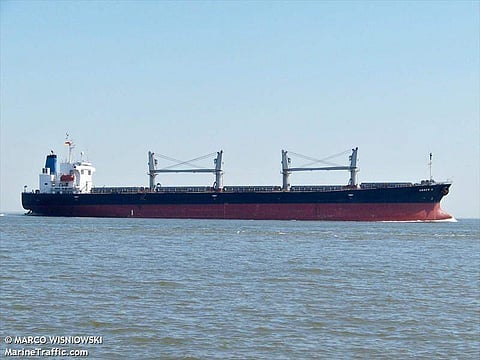

CHENNAI: An India-bound tanker carrying Russian crude oil has abruptly reversed course in the Baltic Sea, raising concerns over possible disruptions in oil trade between India and Russia, Bloomberg reported on Wednesday. The move follows fresh US sanctions on Russian oil majors, which have prompted growing uncertainty among Indian refiners that rely heavily on discounted Russian supplies.
According to the report, the vessel, identified as the Furia, had loaded about 730,000 barrels of Urals crude from Russia’s Primorsk port and initially indicated India’s Sikka port in Gujarat as its destination. However, after reaching the Fehmarn Belt between Denmark and Germany, the tanker turned around and later updated its destination to Port Said in Egypt. Industry trackers say the reversal likely reflects difficulties in shipping, insurance, or compliance arising from the latest sanctions.
The US sanctions, targeting major Russian energy companies including Rosneft and Lukoil, require all ongoing transactions to be wound down by November 21. This has cast a shadow over India’s ability to continue its large-scale purchases of Russian oil, which had become a key component of its energy security strategy since 2022.
Indian refiners—both private and state-owned—are now reviewing contracts with Russian suppliers. Early indications suggest that Russian oil imports to India could fall sharply, potentially even to near-zero levels in the short term. Companies such as Reliance Industries, Indian Oil Corporation, Bharat Petroleum, and Hindustan Petroleum, which together account for most of the country’s refining capacity, are expected to feel the impact.
Since the Ukraine war, India has emerged as one of the largest buyers of Russian crude, benefiting from deep discounts that helped lower its import bill and improve refining margins. A disruption in this supply chain could force refiners to source costlier alternatives from the Middle East, Africa, or Latin America, raising input costs and potentially affecting profit margins.
Shipping and insurance challenges are also intensifying. The turnaround of the Furia underscores how sanctions compliance, vessel tracking, and the tightening scrutiny of the so-called “shadow fleet” are complicating Russian oil exports. As Western governments increase monitoring of Russian shipments, rerouting or cancellation of cargoes bound for Asia could become more frequent.
For India, the situation poses both economic and strategic challenges. While the country is not directly bound by US sanctions, the global nature of shipping, banking, and insurance means Indian refiners must tread carefully to avoid secondary sanctions or disruptions to payment mechanisms. The government is expected to monitor developments closely as refiners seek clarity from suppliers and regulators.
In the near term, crude supply from Russia is likely to remain volatile, with refiners adjusting their procurement mix and drawing on inventories. Over the medium term, India may diversify further toward Middle Eastern and US suppliers to mitigate risk. The potential rise in crude costs, however, could put mild upward pressure on domestic fuel prices or squeeze refining margins unless global oil prices stabilise.
The episode highlights a broader shift in global oil dynamics. As geopolitical tensions and sanctions reshape trade flows, energy importers like India face the complex task of balancing cost, security, and diplomatic considerations.
