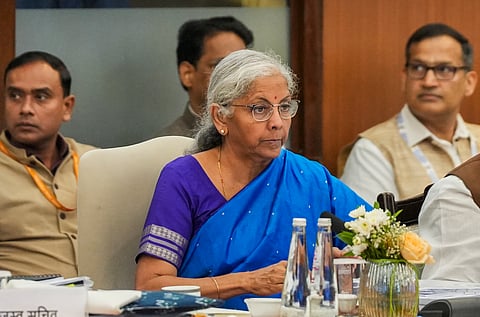

The Goods and Services Tax (GST) Council on Wednesday approved measures aimed at easing compliance for businesses, according to NDTV. Among the key steps, registration time for MSMEs and start-ups has been slashed from 30 days to just three, while a proposal for automated GST refunds for exporters was also cleared.
The council, which began its two-day meeting on Wednesday, focused on the rationalisation of GST tax slabs, a major item on the agenda. Currently, India has four GST brackets, 5%, 12%, 18%, and 28%. Officials are considering cutting the number of slabs by half, including moving 90% of goods currently taxed at 28% down to 18%, and shifting certain items from 12% to 5%. The government expects this move to boost domestic consumption while offsetting an estimated Rs 50,000 crore revenue loss.
Eight sectors are expected to benefit the most from the rationalisation: textiles, fertilisers, renewable energy, automotive, handicrafts, agriculture, health, and insurance. Some goods and services, such as life and health insurance premiums, currently taxed at 18%, could even be exempted from GST altogether. Meanwhile, luxury and “sin” items, including high-end cars, tobacco, and liquor, will continue to attract higher levies, with a Health or Green Energy Cess proposed to replace the expiring Compensation Cess.
The government believes rationalisation will benefit the middle class, lowering the cost of daily-use and aspirational goods. While manufacturers may not fully pass on the reduced GST rates, the cuts are expected to encourage production, increase sales volumes, and potentially boost employment in labour-intensive sectors such as automobiles and consumer electronics.
Officials also see the rationalisation as a tool to counter the impact of the 50% tariffs on Indian exports to the United States, valued at $48 billion, announced last month by the Trump administration. By making domestic goods more competitive and affordable, demand could rise, offsetting some of the export-related losses.
However, the proposal is likely to face opposition from several non-BJP-ruled states, including Tamil Nadu and West Bengal, which are due to vote next year. These states have raised concerns over potential revenue losses, estimated around Rs 50,000 crore, and are expected to seek compensation to offset the shortfall.
Sources said the rationalisation plan is based on eight years of GST collection data, which showed sharp differences in revenue across the existing slabs. Officials argue that lowering rates for high-taxed items could provide significant relief to consumers, particularly the middle class, while simultaneously incentivising manufacturers to increase production and expand employment.
In practical terms, moving goods from the 28% slab to 18% is expected to bring immediate savings to price-sensitive Indian consumers. While the exact items affected are yet to be fully defined, officials noted that the changes will target “daily-use” and “aspirational” goods, aiming to make them more affordable and stimulate demand.
The council will now work to build consensus among states on the proposals, balancing the need for revenue stability with the goal of boosting consumption and manufacturing activity across key sectors.
