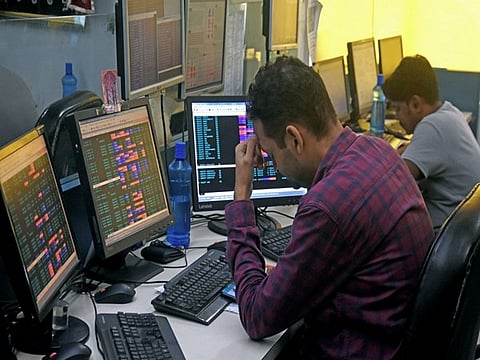

CHENNAI: Indian equities ended lower on Wednesday after a choppy session, with the Sensex slipping around 81,715 points—its weakest level in over a week. Weakness in banking and IT counters, coupled with foreign investor selling, kept sentiment subdued.
A major pressure point remains the rupee, which briefly hit a record low of 88.79 per US dollar before settling slightly higher. The decline reflects ongoing capital outflows and concerns over US trade and visa policies that could hurt India’s export-driven sectors, particularly IT.
.
Still, there are some positive signals. HSBC has upgraded Indian equities to “overweight,” pointing to attractive valuations compared to other Asian peers. It expects the Sensex to touch nearly 94,000 by end-2026, projecting up to 15% upside in the medium term. A recent regulatory clearance for Adani Group also helped ease investor concerns over governance risks.
In the near term, however, analysts expect markets to remain range-bound. The balance between domestic growth resilience and external headwinds—currency weakness, foreign outflows, and global policy uncertainty—will decide the direction. IT and financials are likely to stay under pressure, while consumption-oriented and defensive stocks may see relative strength.
Across global markets, US indices have been trading near record highs, helped by the Federal Reserve’s first rate cut in months. But the outlook now is mixed: the OECD has warned that the full impact of recent US tariffs could slow growth in 2026, even as short-term momentum remains firm. Wall Street is now watching the Fed’s next steps closely to gauge whether further easing is likely.
In Europe, stocks have slipped, led by banks and financials. German business sentiment weakened in September, raising questions about growth in the eurozone’s largest economy. Inflation concerns, especially in the UK, remain a drag on confidence. Analysts see European markets lagging behind the US unless governments step up fiscal support or growth stabilises.
Overall, the near-term outlook across India, the US, and Europe points to volatility. For India, currency stability and foreign fund flows will be decisive. In the US, corporate earnings and Fed guidance are in focus, while Europe faces the challenge of weak growth momentum. Investors are likely to remain cautious, with defensive positioning dominating until clearer policy and growth signals emerge.
