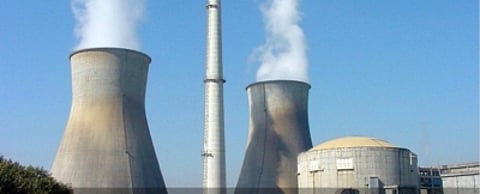

CHENNAI: The Indian government is preparing to set up a dedicated nuclear liability fund that will cover compensation claims exceeding ₹1,500 crore ($169 million) in the event of a nuclear accident.
The initiative is designed to address long-standing concerns over risk-sharing, which have discouraged global suppliers and private firms from investing in India’s nuclear energy programme, Reuters reported on Thursday quoting two senior government officials familiar with the development.
A dedicated nuclear fund is a major shift in the current risk-sharing rules. At present, India’s nuclear liability law makes plant operators responsible for damages up to Rs 1,500 crore, with the government assuming responsibility for any claims beyond that threshold. However, the absence of a clear financial framework for liabilities above this limit has created uncertainty, particularly for foreign equipment makers wary of open-ended risks.
The new fund would create a structured pool of money—backed by government allocations and potentially supported by industry contributions—to meet compensation requirements in excess of the operator’s liability cap. Officials said the plan aims to provide “predictability and confidence” for suppliers, while ensuring victims of a nuclear accident have a guaranteed source of relief.
Industry analysts note that liability concerns have been a major stumbling block in India’s nuclear sector. Despite ambitious goals to expand nuclear capacity as part of its clean energy transition, India has seen limited foreign participation, especially from US, French and Japanese suppliers, who have sought stronger safeguards against financial exposure.
By introducing a dedicated fund, the government hopes to reassure these players and accelerate stalled projects. “This mechanism could open the door for advanced reactor technologies and greater private involvement in construction and supply chains,” says an industry expert quoted in the report.
Why is it important
Nuclear power accounts for less than 3 percent of India’s total electricity generation, but the government wants to significantly scale up capacity to reduce reliance on fossil fuels. A more secure liability framework is seen as critical to achieving these targets, particularly as India works toward its 2070 net-zero emissions goal.
The proposed fund is expected to be finalised in consultation with regulators, state-owned operators such as NPCIL (Nuclear Power Corporation of India Ltd.), and global suppliers. Formal details, including the size of the corpus and its funding model, are likely to be announced in the coming months, according to the officials quoted in the Reuters report.
