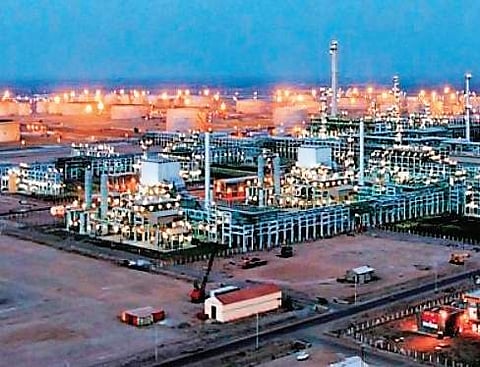

Reliance Industries is likely to receive a licence from the US that would allow it to import crude oil from Venezuela, a development that could significantly alter the company’s crude sourcing strategy and have broader implications for India’s energy security and global oil trade flows. According to reports, the move signals a calibrated easing of long-standing US restrictions on Venezuelan oil transactions and reflects shifting geopolitical and energy market priorities.
If the licence is formally cleared, it would enable Reliance Industries to legally buy and refine Venezuelan crude, overcoming barriers imposed by US sanctions that have curtailed such trade for several years. Reliance, which operates one of the world’s largest and most complex refining systems at Jamnagar, had earlier stopped direct Venezuelan imports as sanctions tightened and compliance risks rose. The new permission would mark a notable reversal, reopening access to a key source of heavy crude that is well suited to the company’s refining configuration.
From a commercial standpoint, Venezuelan crude is typically available at a discount to global benchmarks because of quality, logistical challenges and geopolitical risk. For a complex refiner like Reliance, access to such barrels can materially lower feedstock costs and support refining margins, especially at a time when global crude markets remain volatile and competition for discounted supplies has intensified. The ability to directly source Venezuelan oil, rather than rely on intermediaries or alternative heavy grades, would give the company greater flexibility in optimising its crude slate.
The development also fits into a broader recalibration of global energy diplomacy. The US has been selectively relaxing restrictions on Venezuela’s oil sector as it seeks to stabilise energy markets, encourage incremental supply and pursue strategic objectives in the region. Granting licences to refiners and traders allows Venezuelan crude to re-enter global markets in a controlled manner without fully dismantling the sanctions regime. For India, this creates an opportunity to diversify crude imports at a time when refiners are reassessing over-dependence on any single geography amid ongoing geopolitical uncertainty.
For Reliance, the timing is particularly relevant. Indian refiners have benefited in recent years from discounted Russian oil, but evolving geopolitical alignments, potential tariff changes and logistical considerations have increased the need to broaden sourcing options. Venezuelan crude could emerge as a complementary supply, helping balance cost efficiency with risk management. The move may also enhance India’s negotiating leverage in global oil markets by widening the pool of potential suppliers.
That said, the arrangement carries inherent risks. US policy on Venezuela remains sensitive to political developments, and licences are subject to conditions that could be tightened or withdrawn if circumstances change. Operational challenges in Venezuela’s oil sector, including infrastructure constraints and production reliability, also add an element of uncertainty to long-term supply planning. As a result, while the licence would open a valuable window of opportunity, companies are expected to proceed cautiously and avoid excessive dependence on a single sanctioned source.
The prospect of Reliance securing a US licence for Venezuelan oil underscores the increasingly complex interplay between geopolitics, sanctions policy and commercial energy strategy. If implemented smoothly, it could lower costs for India’s largest refiner, modestly reshape global crude flows and signal a pragmatic shift in how sanctioned oil is reintroduced into international markets under regulatory oversight.
