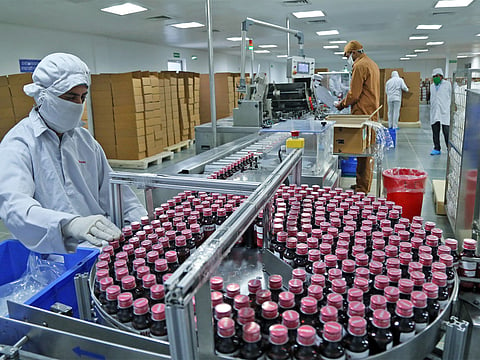

India’s pharmaceutical exports continued to expand in 2024–25, rising 9.4 percent to $30.47 billion, reflecting the sector’s ability to sustain growth despite a challenging global environment. The commerce ministry said on Saturday that the industry is now aiming for a return to double-digit export growth by 2026–27, signalling renewed confidence after a period marked by pricing pressure and regulatory tightening in key overseas markets.
The performance in 2024–25 points to a phase of stabilisation for India’s pharma exporters. Demand for affordable generic medicines remained the backbone of exports, even as margins were squeezed by intense competition, especially in the US. Regulatory compliance costs and longer approval timelines in developed markets also continued to weigh on profitability, making growth increasingly dependent on scale, efficiency and product mix rather than volumes alone.
Export-related challenges and strategic priorities were discussed during a Chintan Shivir held in Ahmedabad, where government officials and industry representatives reviewed the sector’s medium-term roadmap. The discussions underscored the need to address regulatory bottlenecks, improve the speed of market approvals and enhance coordination between policymakers and exporters. Industry participants emphasised that predictable regulations and faster clearances are essential to maintain momentum and attract fresh investment into export-oriented manufacturing.
There was also a clear recognition that the next phase of growth will need to be driven by a shift towards higher-value products. Companies are increasingly focusing on complex generics, injectables, biosimilars and contract manufacturing for global innovators, as opportunities in commoditised generics become more limited. Alongside this, exporters are looking to diversify geographically, with emerging markets in Africa, Latin America and parts of Asia expected to play a larger role in reducing over-reliance on a few mature markets.
Supply-chain resilience featured prominently in the discussions, particularly the availability and cost of active pharmaceutical ingredients. While domestic API capacity has expanded in recent years, competitiveness remains sensitive to input costs and scale. Industry executives noted that strengthening local supply chains without compromising on cost efficiency will be crucial for sustaining export growth.
Looking ahead, the ambition to achieve double-digit export expansion by 2026–27 will depend on how effectively the sector can balance regulatory compliance, cost pressures and innovation. With exports already crossing the $30 billion mark, the challenge is no longer just about increasing volumes, but about building depth through higher-value offerings and broader market access. If policy support and industry execution remain aligned, India’s pharmaceutical exports are well placed to move into a more durable and value-driven growth phase.
