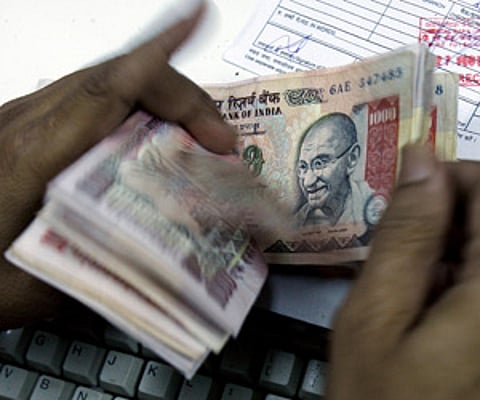

The Indian rupee ended the week of February 23–28 under renewed pressure, weakening against the U.S. dollar as rising global oil prices, persistent foreign fund outflows and heightened geopolitical tensions combined to dent investor sentiment.
The currency began the week on a relatively steady footing, trading in a narrow band just below the 91 mark against the U.S. dollar. Early stability was supported by intermittent dollar sales from the Reserve Bank of India and some recovery in domestic equities. However, as the week progressed, external headwinds gathered pace. Escalating tensions involving the United States, Israel and Iran pushed global crude oil prices sharply higher, intensifying concerns about India’s import bill and widening trade deficit.
By midweek, the rupee started to drift lower as importers stepped up dollar purchases amid the spike in Brent crude. Oil’s rally, driven by fears of supply disruption around the Strait of Hormuz, added a fresh layer of vulnerability to the currency. Higher crude prices typically translate into increased demand for dollars from refiners and energy companies, putting direct pressure on the rupee.
Foreign portfolio flows also played a critical role in shaping the week’s trajectory. Overseas investors were net sellers in domestic equities during several sessions, prompting repatriation of funds and strengthening the dollar against emerging market currencies, including the rupee. Global risk aversion rose toward the latter part of the week, leading traders to trim exposure to risk-sensitive assets and move capital into traditional safe havens.
By Friday and into Saturday’s close, the rupee had slipped past the psychologically significant 91 level, marking one of its weaker finishes in recent weeks. Intraday volatility increased, with the currency testing the upper end of its recent trading range before modest central bank-related dollar supply helped cap sharper losses. Market participants widely expect the Reserve Bank of India to continue intervening selectively to prevent disorderly movements, though it is unlikely to defend any specific level aggressively.
Despite the late-week weakness, the broader monthly picture remains somewhat mixed. Earlier gains in February, driven by selective foreign inflows and improved domestic macro sentiment, helped cushion the overall decline. However, the final stretch of the month underscored how quickly global developments can reverse short-term currency trends.
Looking ahead, the rupee’s direction will hinge largely on crude oil dynamics, foreign capital flows and the evolution of geopolitical risks. If oil prices remain elevated and global uncertainty persists, the currency could stay under pressure near current levels. Conversely, any easing in tensions or renewed foreign inflows into Indian assets may help stabilise the rupee in the coming week.