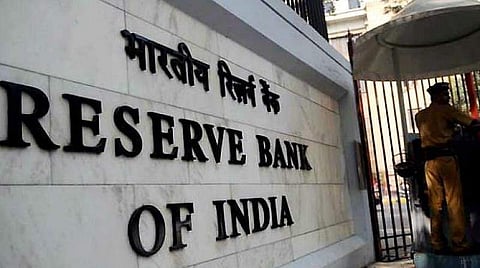

The Reserve Bank has said that no commercial bank will fail to meet the minimum capital requirement even under adverse scenarios.
“Our macro stress test results revealed that the aggregate CRAR (capital adequacy ratio) of 46 major commercial banks may drop from 17.1 percent in September 2025 to 16.8 percent by March 2027 under the baseline scenario and may fall to 14.5 percent and 14.1 percent under the hypothetical adverse scenarios 1 and 2, respectively. However, none of the banks would fall short of the minimum CRAR requirement of 9 percent even under the adverse scenarios,” the RBI said in its latest financial stability report (FSR).
Just two of the 46 banks may have to dip into their capital conservation buffer (CCB) under adverse scenario 1, while four banks may require dipping into the CCB under adverse scenario 2, if stakeholders do not infuse any further capital into these banks, the central bank said in the report.
Adverse scenario 1 assumes that a phased slowdown in global growth would lead to a gradual drop in domestic GDP growth and a moderate rise in domestic inflation over time leaving the RBI no leeway to ease policy rates to alleviate the situation.
Adverse scenario 2 assumes that global trade uncertainties would result in a sharp dent in the domestic growth, inflation would rise beyond 6 percent and the RBI would hike the repo rate.
On the asset quality side, the report said the aggregate gross non-performing assets (GNPA) ratio of these 46 banks may improve from 2.1 percent in September 2025 to 1.9 percent in March 2027 under the baseline scenario, per FSR and it may rise to 3.2 percent and 4.2 percent, under adverse scenarios 1 and 2, respectively.
The report said public sector banks and foreign banks led the continued improvement in asset quality and that the GNPA ratio declined to a fresh multi-decadal low of 2.1 percent as of September 2025, and their net NPA ratio remained at a record low of 0.5 percent.
“The half-yearly slippage ratio, measuring new accretions to NPAs as a share of standard advances at the beginning of the period, remained stable at 0.7 percent, though it increased marginally for private banks,” the RBI said, adding write-offs ratio declined for state-run banks, while it shot up in case of private lenders in FY26.
While banks’ asset quality remained stable, their on-year growth in net interest income has remained muted over the first half of FY26, impacting the profit growth.
Banks' annual deposit growth continued to fall in successive half years since March 2024 and reached 9.8 percent as of September 2025, led by sharp deceleration for private banks. The fall in share of low cost Casq deposits and rise in share of time deposits across bank groups continued.
“Bank credit growth remained steady at 11.0 percent at September 2025. Credit growth of state run lenders fell marginally but private banks more than compensated with higher growth...In sectoral composition, the shares of agricultural and industrial loans in aggregate credit contracted, while those of services and personal loans expanded over the previous year. Industrial loans growth for private lenders and personal loans of public sector lenders show sharp growth in the September quarter," the report concluded.
