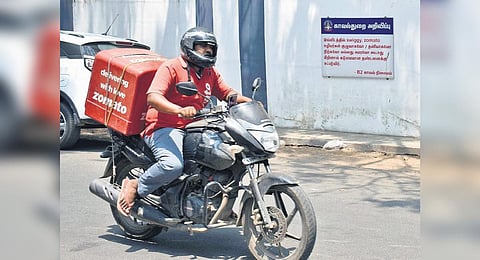

CHENNAI: A fresh row has erupted in India’s gig economy after a workers’ union strongly criticised Zomato CEO Deepinder Goyal’s recent claims on delivery partners’ earnings and working conditions, arguing that the platform’s portrayal of “decent work” does not reflect realities on the ground.
As reports suggested, the Telangana Gig and Platform Workers Association said Zomato delivery partners continue to operate without basic employment protections, including paid leave and social security, and accused the company of overstating both incomes and welfare support. The union’s comments came in response to public statements by Goyal defending the company’s gig work model and highlighting what he described as improved hourly earnings and flexibility for delivery partners.
According to the union, the headline earnings figures cited by the company fail to account for significant out-of-pocket expenses borne by workers, such as fuel costs, vehicle maintenance and phone data. Once these costs are deducted, the association claimed that effective take-home earnings are substantially lower than what is publicly projected. It added that relying on customer tips to supplement income is unrealistic, as tipping remains sporadic and limited to a small share of orders.
The union also rejected assertions that platform work offers adequate welfare safeguards. It said delivery partners do not receive paid leave, pension benefits or comprehensive social security coverage, leaving them financially vulnerable in cases of illness, injury or loss of work. While platforms often point to insurance tie-ups, the union argued that coverage is conditional, limited in scope and difficult to access in practice.
Worker representatives further said that the pressure to meet tight delivery timelines and fluctuating incentive structures adds to income uncertainty, forcing many riders to work long hours to earn a modest monthly income. They maintained that flexibility, often cited as a key advantage of gig work, does not compensate for the absence of stable earnings and statutory protections.
Zomato has consistently defended its model, stating that it provides income opportunities, flexible schedules and optional welfare benefits to delivery partners who choose when and how much to work. The company has argued that its platform enables supplementary income and suits workers who value autonomy over fixed employment structures.
However, social economy experts who spoke to TNIE said the dispute and the sharply differing claims highlight a broader and intensifying debate over labour rights in India’s fast-growing gig economy, as worker groups press for clearer definitions of employment status and stronger social security protections.
“With platform-based work expanding rapidly across sectors, the growing friction between companies and unions is increasingly shaping conversations around fair pay, worker protections and the future of gig labour in the country,” one expert said.
