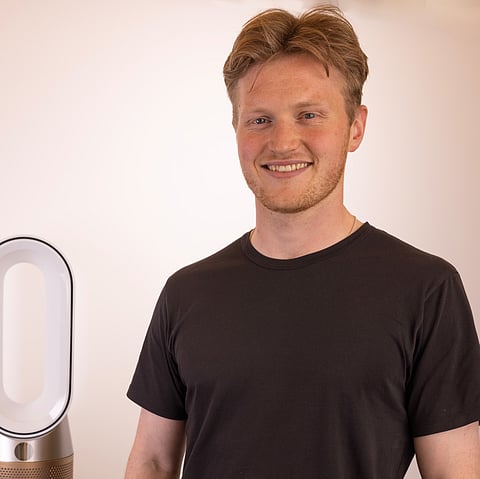

In an interview with TNIE, Bradley Fishwick, Senior Design Engineer at Dyson, shares key things to keep in mind when purchasing an air purifier, how to take care of it for long-lasting performance, and why indoor pollution is equally harmful to people.
There are reports suggesting that indoor air can sometimes be more polluted than outdoor air. What is your perspective on this, and what factors contribute to indoor air pollution?
While outdoor air pollution often gets more attention because it is visible, indoor air pollution can sometimes be just as concerning, and in certain situations, even more concentrated. This is because outdoor pollutants such as vehicle emissions and dust can easily enter our homes through doors, windows, and small gaps, and once inside, they tend to linger in enclosed spaces with limited ventilation. At the same time, many everyday household activities contribute to indoor pollution. Cooking, cleaning with chemical-based products, lighting candles or incense, and even the movement of people can release fine particles and gases into the air.
Since most people spend up to 90% of their time indoors sleeping, working, and relaxing, this largely invisible pollution can result in prolonged exposure.
How can indoor air pollution be effectively managed? Do you believe air purifiers are the only solution, or are there other important measures?
Managing indoor air pollution effectively requires a layered approach rather than relying on a single solution. The first step is reducing the sources of pollution indoors and keeping dust under control through regular cleaning. Ventilation also plays an important role by opening windows when outdoor air quality is better. However, ventilation alone isn’t always enough, especially in urban environments where outdoor pollution can easily enter homes. This is where air purifiers play an important role. Dyson’s latest purifiers are designed to tackle the full spectrum of indoor pollution, from ultrafine particles, like PM10 and PM2.5, to gases such as VOCs and nitrogen dioxide (NO₂), which enter from traffic or are released during cooking and cleaning. Our machines use fully sealed HEPA H13-grade filtration systems that effectively capture 99.95% of particles as small as 0.1 microns.
For households that do not own an air purifier, what practical steps can they take to reduce or control indoor air pollution?
If someone doesn’t have an air purifier at home, one can still take practical steps to reduce indoor air pollution. Keep the home a shoe-free zone and use microfibre doormats to stop dust and outdoor pollutants at the door. Opt for no- or low-VOC cleaning products and avoid synthetic fragrances to limit indoor pollutants. Ventilate the home during times when outdoor air is cleaner, like early mornings and late evenings, and use exhaust fans to manage humidity and fumes. While these measures can make a difference, an air purifier is the most effective way to ensure cleaner air, especially in cities with variable pollution.
What key factors should consumers consider when purchasing an air purifier?
When buying an air purifier, it’s important to look beyond what’s visible. Indoor pollutants like ultra-fine particles can easily go unnoticed but can reach deep into our lungs and even enter our bloodstream. That’s why filtration really matters. Coverage and airflow circulation also influence performance. A purifier may purify the air around it, but if it pushes clean air only upwards or in a single direction, it won’t distribute purification evenly throughout a space. Size and portability are practical considerations too. For smaller rooms and bedrooms, compact and lightweight machines make everyday use more convenient. The Dyson HushJet™ exemplifies this approach; its slim, compact form factor and lightweight build make it easy to place on bedside tables, study desks or smaller living areas without occupying significant space or requiring effort to move between rooms. For consumers, the ideal purifier is one that quietly and efficiently cleans the space they actually live in, without taking up room, demanding constant attention, or compromising comfort.
Could you explain the importance of after-sales service, long-term performance, and filter lifecycle when choosing and maintaining an air purifier?
Buying an air purifier is an investment, so it’s important to ensure it works efficiently over time. When filters get clogged, the machine has to work harder, putting extra strain on its components, which can lead to repairs or even the need for a replacement unit. Regularly changing the filter every 12 months or sooner if needed, keeps the purifier running as designed, maintaining strong airflow and effective cleaning, while also saving money in the long term. The filter lifecycle is central to both performance and cost. Filters gradually lose efficiency as they trap particles and gases, and delaying replacement can allow pollutants to bypass the system and stress the purifier’s motor and electronics. Using genuine replacement filters helps preserve both efficiency and warranty coverage. With the Dyson HushJet™ Purifier Compact, the advanced 360° electrostatic filter is engineered to last up to five years, and the machine provides filter alerts via the display or the MyDyson™ app, so users always know when it’s time to replace filters, ensuring consistent, long-term performance.
