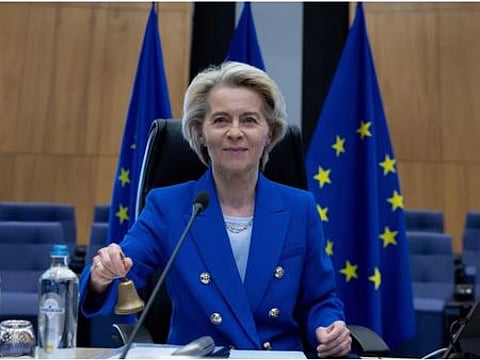

European Commission President Ursula von der Leyen confirmed that India and the EU are moving towards the conclusion of the Free Trade Agreement (FTA) negotiations soon and called it a ‘historic trade agreement’.
During her address at the World Economic Forum (WEF) in Davos on Tuesday, the European Commission President said, “The next weekend, I will travel to India. There's still work to do, but we are on the cusp of a historic trade agreement, indeed some call it the mother of all deals- one that would create a market of 2 billion people, accounting for almost a quarter of global GDP.”
India officially began its negotiations for an FTA with the EU back in 2007. However, due to significant differences over market access, tariffs, and regulatory frameworks, the talks were suspended in 2013.
Commerce Minister Piyush Goyal has called the FTA as the ‘mother of all deal’ recently. “I have done seven deals so far- all with developed economies. This one will be the mother of all,” Goyal said during a media briefing last week. India and EU are likely to conclude their long-pending FTA talks at the 16th India–EU Summit in New Delhi, as negotiations move into the final phase after nearly 18 years.
President Ursula von der Leyen and President of the European Council Antonio Costa will be visiting India from January 25 to 27 as chief guests at the Republic Day celebrations. During the visit, leaders from both sides will hold summit-level discussions with Prime Minister Narendra Modi. A formal signing of the trade pact is expected around January 26–27.
Currently, the EU accounts for more than 17% of India’s total share of exports in 2024-25, with total exports touching $75.85 billion. However, the imports from the EU stood at $60.68 billion in the same year.
While both sides have confirmed the conclusion of the deal at the earliest, sensitive sectors of both India and the European Union have been kept out of the deal, the Ministry of Commerce has said. Once finalised, this FTA will be India’s largest trade deal – as Indian exporters will have access to 27 countries in the EU.
