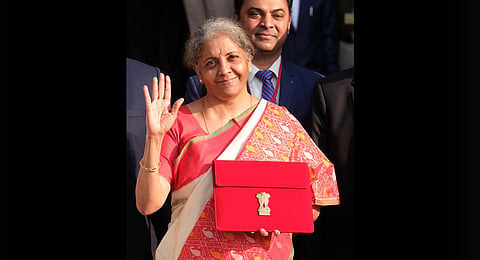

As we approach the Union Budget 2026, the conversation naturally turns to the significant numbers expected for national development. The government has already set a formidable stage with an infrastructure roadmap that allocates roughly Rs 17 lakh crore across 852 projects. While the magnitude of these allocations sets the stage, the true measure of this budget resides in the velocity of its deployment. With the capital secured, the next stage of our development is completely reliant on the speed at which we can implement these ideas into tangible assets.
We have already seen what happens when policy intent translates effectively into action. The Production Linked Incentive scheme is a strong example of this alignment, having attracted actual investments of around Rs 1.88 lakh crore and generating over 12 lakh jobs by the middle of last year. The challenge now is to bring this same efficiency to the broader infrastructure pipeline, ensuring that road, power, and logistics projects move as swiftly as our manufacturing ambitions.
This potential becomes even more evident when examining the success stories emerging from rural and semi-urban India. The success of companies like Zoho in rural Tamil Nadu provides strong examples of how technology can flourish outside of major cities. Providing opportunities, their rural operations have generated more than 3,000 jobs, showing that talent thrives when given the chance, no matter where.
Similarly, companies like Aequs in Belagavi employ close to 5,000 people in aerospace manufacturing, with the vast majority of that talent drawn from the local districts. These are not just isolated anecdotes but indicators of a massive rural opportunity. If electricity, logistics, and connectivity remain consistent in these areas, we can expect to see many more businesses following this path.
However, realizing this vision requires us to address the friction points that currently slow us down. We often hear of cost overruns in ongoing projects that reflect the compounding cost of delays rather than a lack of intent. Furthermore, with private sector participation in the infrastructure pipeline hovering around 1% against a much higher target of 22%, it is clear that we need to de-risk these investments. The private sector is eager to participate, but it needs the assurance that land acquisition and clearances will move according to a predictable timeline.
The solution lies in a deeply collaborative approach that prioritizes speed and institutional efficiency. We have already seen how effective targeted government oversight can be through the PRAGATI platform, which has been instrumental in resolving issues across more than 3,300 projects. There is a strong case to be made for establishing a dedicated body focused specifically on rural infrastructure to further this agenda.
As we look to the upcoming budget, the industry is hopeful for a commitment to strict execution benchmarks and effectively functioning single-window clearance mechanisms. Beyond just building new assets, we must also focus on the sustainability and maintenance of what we construct. If the budget emphasises these timelines and service levels, it will provide the necessary confidence to the market.
Umesh Revankar is executive vice chairman, Shriram Finance Ltd
